E. Robinson
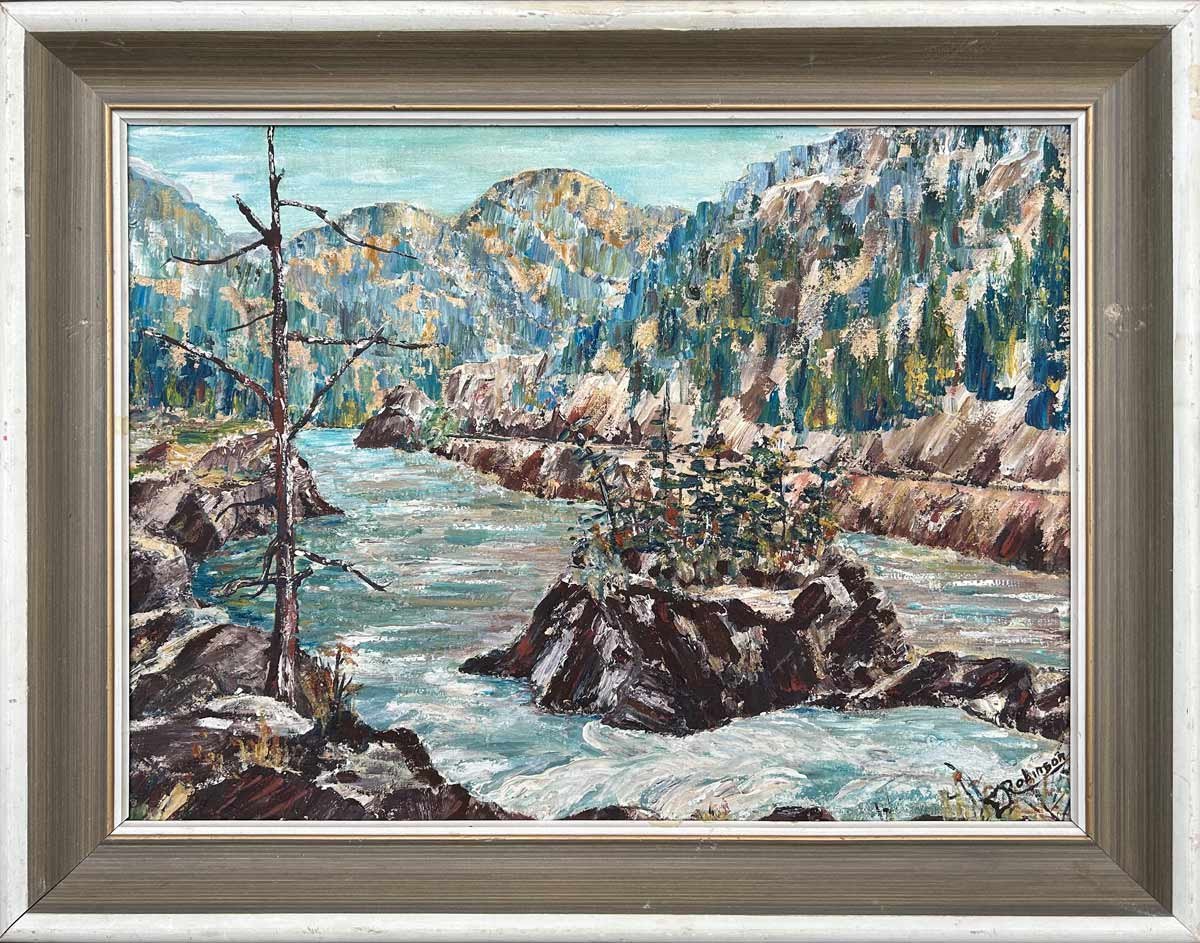
Steamboat Rock, Fraser Canyon, B.C.
E. Robinson
Painting on board, 24” x18”
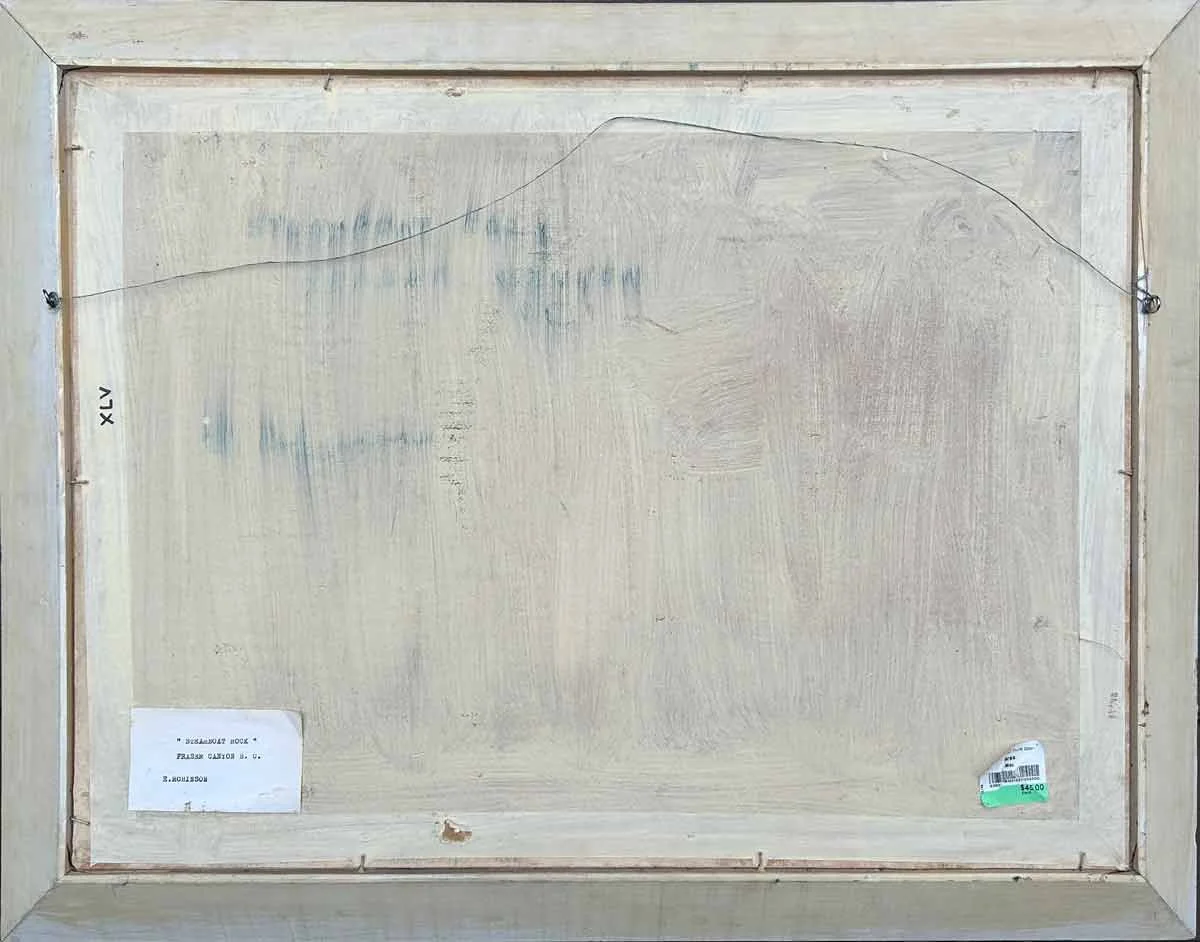
Back of Steamboat Rock, Fraser Canyon, B.C. by E. Robinson
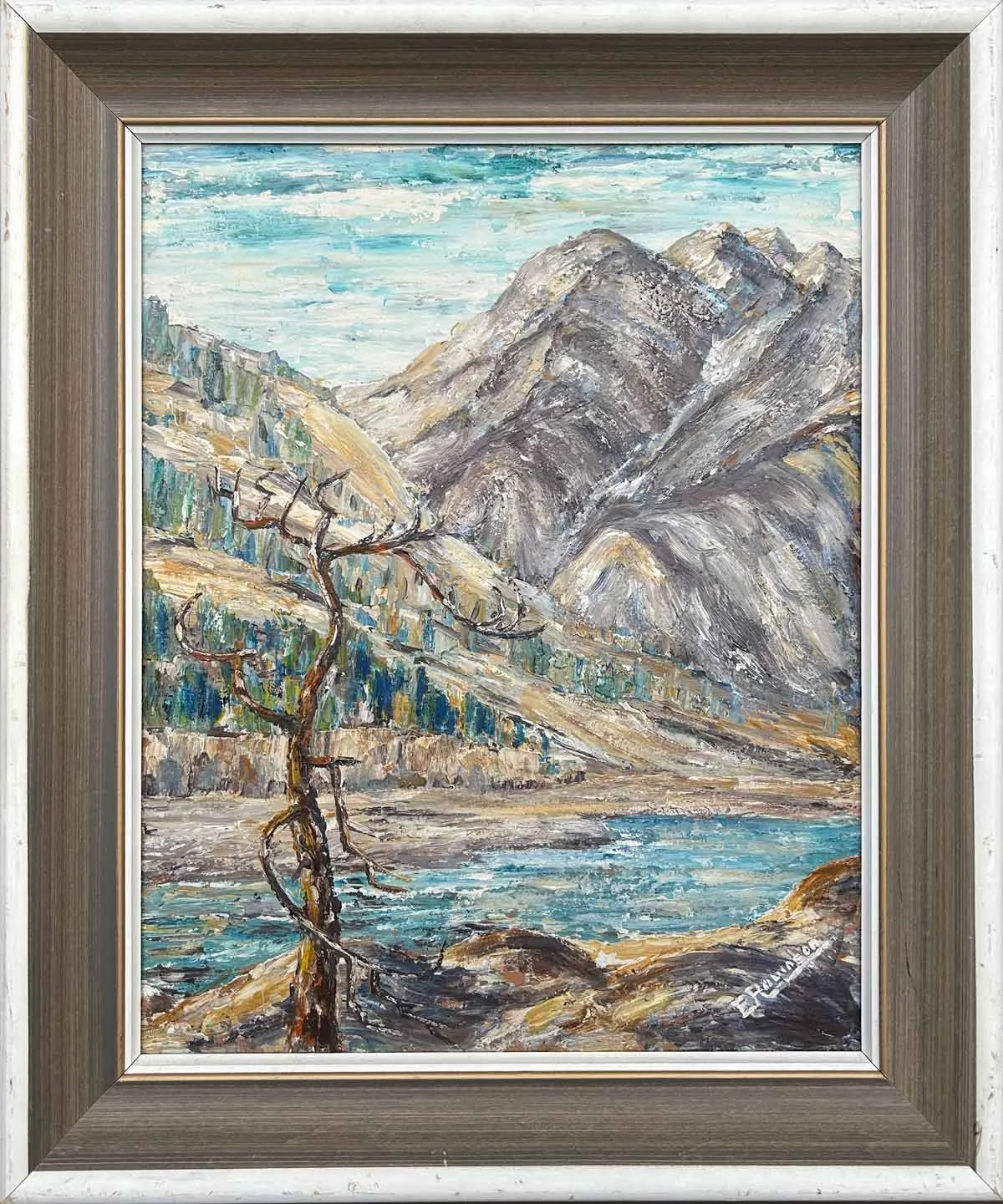
Mt. Skihist, Lytton B.C.
E. Robinson
Painting on board, 16” x 20”
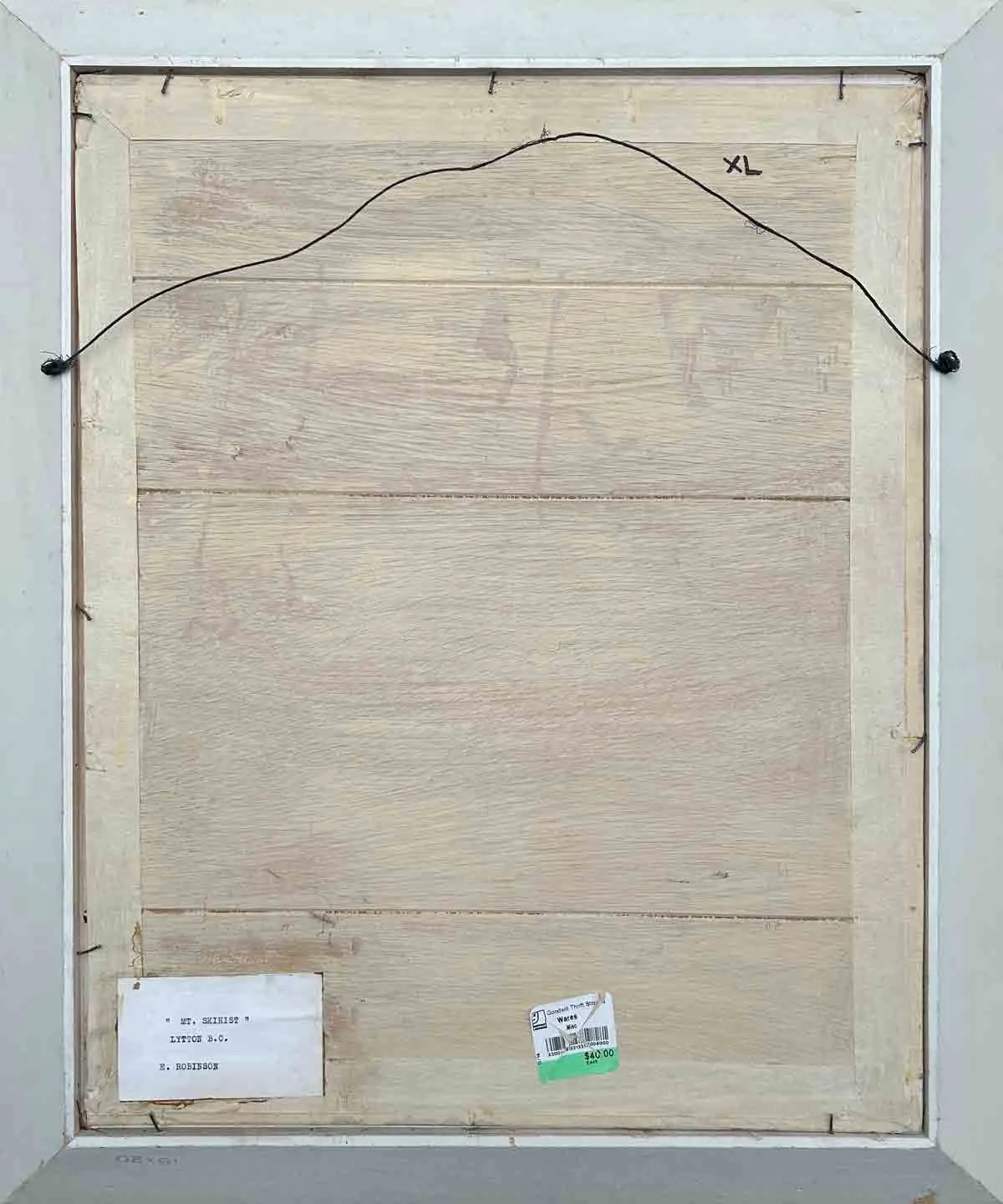
Back of Mt. Skihist, Lytton B.C. by E. Robinson
These two paintings by E. Robinson were acquired together and clearly belong to the same body of work. Both are painted on wood panel, both depict specific locations in British Columbia’s Fraser Canyon, and both are titled and identified on the reverse—an act of intention that distinguishes them from many otherwise anonymous landscapes.
The first, Steamboat Rock, Fraser Canyon, B.C., measures 24 × 18 inches (28.25 × 22.25 inches framed). The second, Mt. Skihist, Lytton, B.C., measures 16 × 20 inches (20.25 × 24.25 inches framed). Each was purchased on November 17, 2024, from Goodwill South Edmonton.
Stylistically, the paintings are bold and physical. Thick impasto is used to carve the canyon walls and riverbanks, with layered strokes of blue, green, ochre, and grey creating a faceted sense of rock and water. The Fraser River is not treated as a reflective surface but as a moving force—textured, directional, and insistent. Trees are reduced to rhythmic verticals; cliffs become planes of colour and weight.
There is a clear understanding here of the Fraser Canyon as a geological structure rather than a picturesque backdrop. These are not panoramic views meant to soften the landscape. They emphasize compression, erosion, and scale—the way the river cuts, the way rock holds.
Little is currently known about E. Robinson beyond these works. No dates are provided, and no further biographical information accompanies them. What is known is that the artist chose specific sites, named them carefully, and committed them to durable supports. Painting on wood panel suggests permanence and deliberateness—these were not studies meant to be discarded.
Together, the paintings read as acts of witness. They record not just what the Fraser Canyon looks like, but how it asserts itself: steep, narrow, and unresolved. Collected now, far from their original context, they continue to carry that sense of place with clarity and weight.