Odds n' Ends show at Caffè Sole
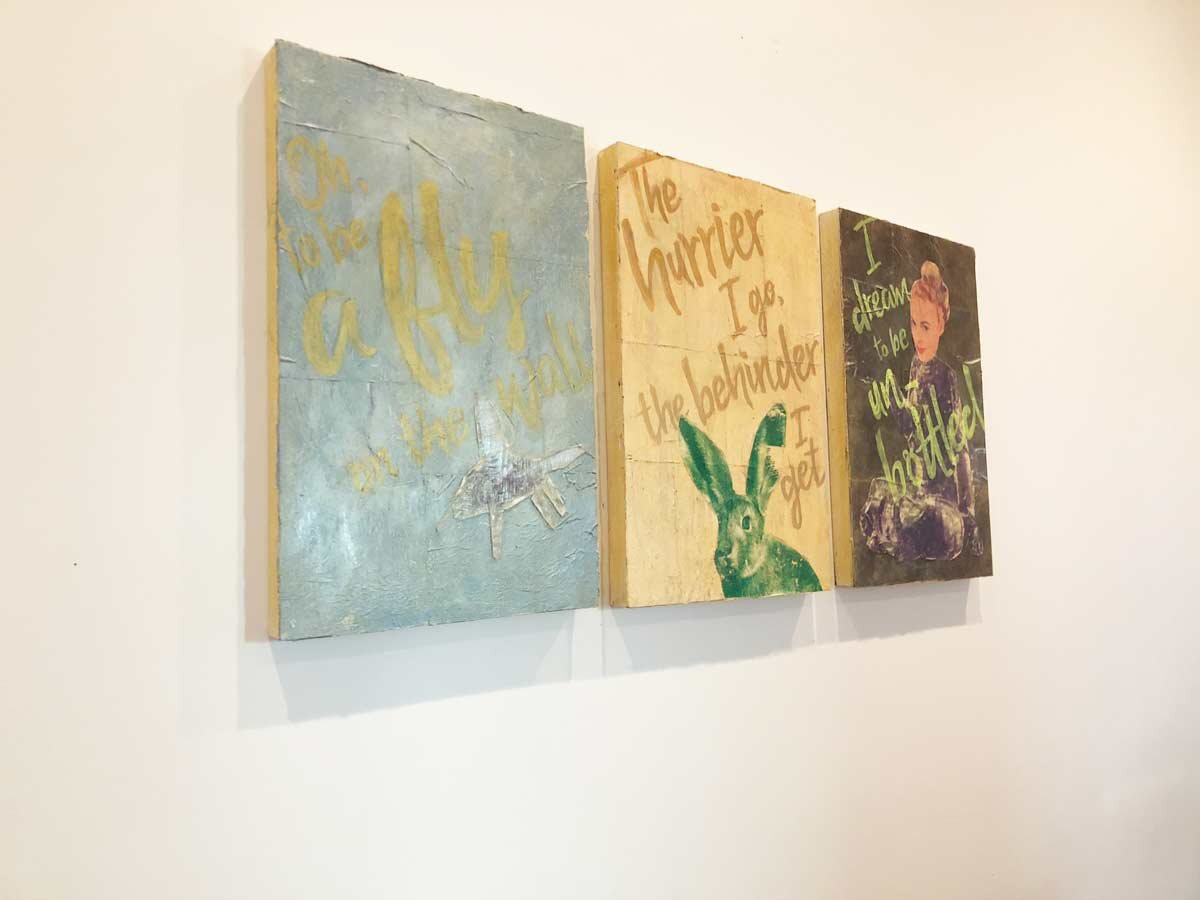
I’m currently showing (and selling!) a group of works called “Odds n’ Ends” on display at Caffè Sole in Edmonton. Many of these pieces are all studies for a larger series of works like my “Postcards to Mrs. Lindahl” and the “Glass Slide” series, which were completed and shown in local and national art exhibitions in the early 2000s.
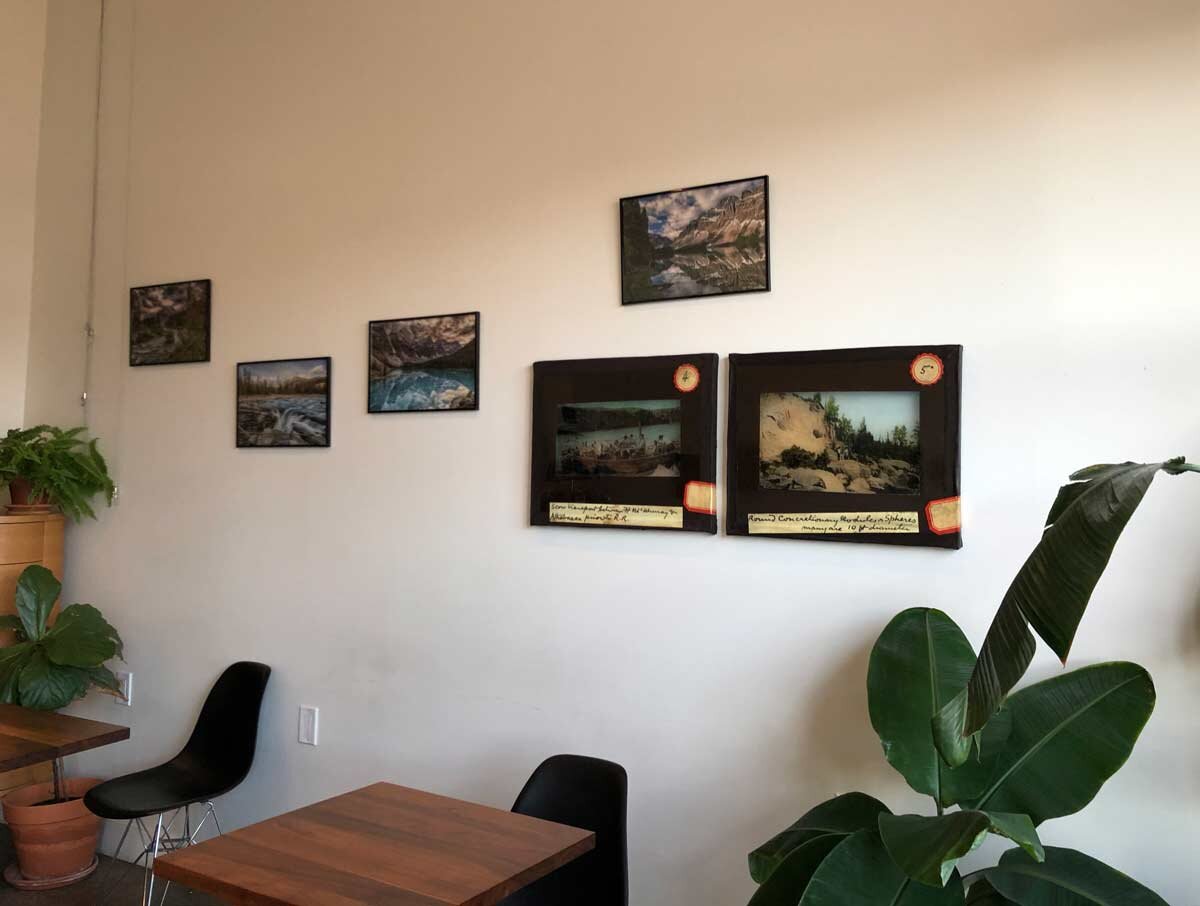
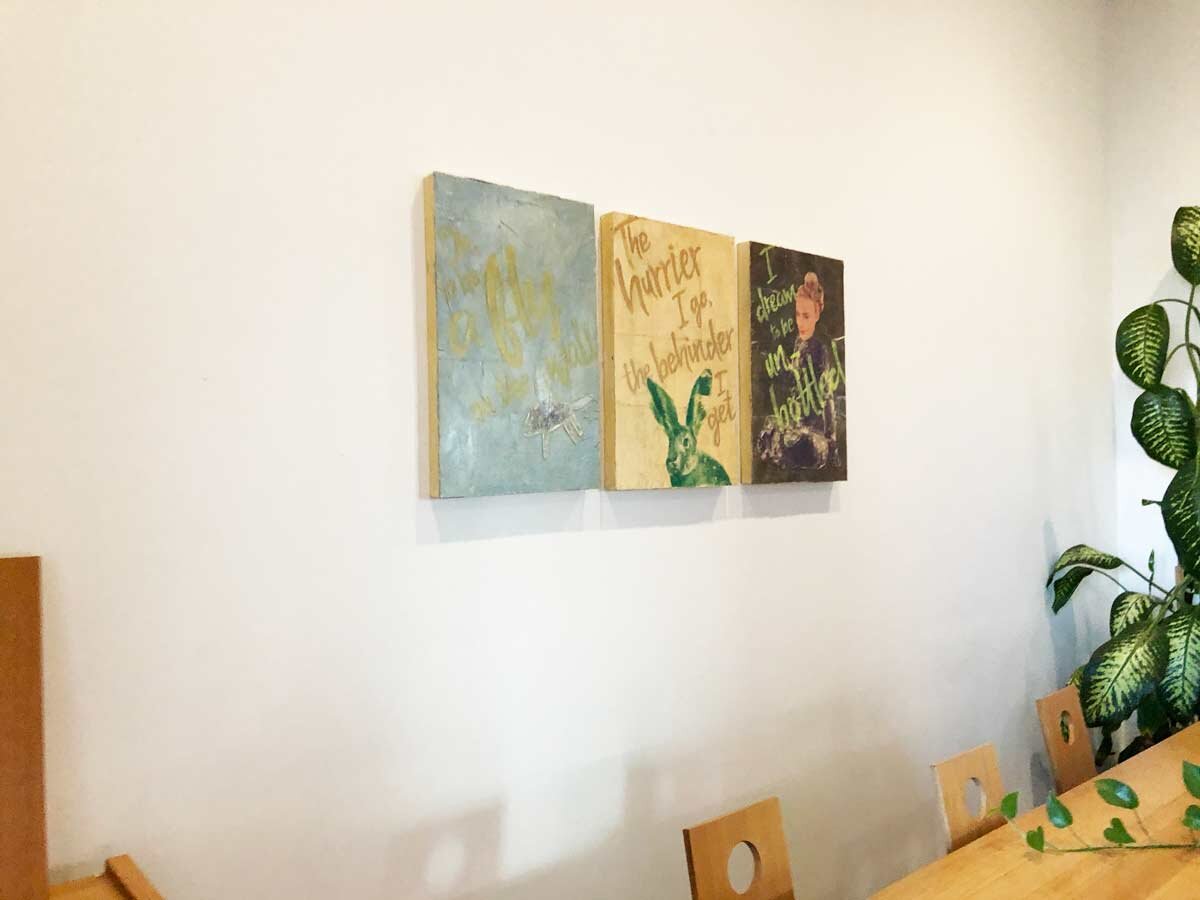
The individual pieces are listed below, as well as a few installation shots from Caffè Sole.
Show runs until October 22, 2020. Let me know if you’re going to drop by — my studio is beside the cafe, we can grab a coffee!
Dimensions: 9.75” (w) x 7.25” (h)
Medium: Acrylic and gel medium on masonite
These small paintings were part of my initial studies for my large 100 painting series for Postcards to Mrs. Lindahl (in Westlock, Alberta).
The source of these paintings were 100 postcards that I found in an old second hand book store, all addressed to the same woman (Mrs. Lindahl) in Westlock Alberta, from the 1920s to the 80s. These postcards are all from different people, from around the world. After showing these in The Works in 2000, I found out that Mrs. Lindahl owned a shop in Westlock, and people would send her greetings from their travels.
For these small studies, I used a gel transfer process to transfer the writing from the back of the postcard onto the painting surface, and then hand painted the stamp in acrylic paint.
Dimensions: 9.75” (w) x 7.25” (h)
Medium: Acrylic and gel medium on masonite
These small paintings were part of my initial studies for my large 100 painting series for Postcards to Mrs. Lindahl (in Westlock, Alberta).
The source of these paintings were 100 postcards that I found in an old second hand book store, all addressed to the same woman (Mrs. Lindahl) in Westlock Alberta, from the 1920s to the 80s. These postcards are all from different people, from around the world. After showing these in The Works in 2000, I found out that Mrs. Lindahl owned a shop in Westlock, and people would send her greetings from their travels.
For these small studies, I used a gel transfer process to transfer the writing from the back of the postcard onto the painting surface, and then hand painted the stamp in acrylic paint.
Dimensions: 24” (w) x 16” (h)
Medium: Acrylic paint, acrylic gel transfer and damar resin varnish
These paintings were part of my initial studies for my large 100 painting series for Postcards to Mrs. Lindahl (in Westlock, Alberta).
The source of these paintings were 100 postcards that I found in an old second hand book store, all addressed to the same woman (Mrs. Lindahl) in Westlock Alberta, from the 1920s to the 80s. These postcards are all from different people, from around the world. After showing these in The Works in 2000, I found out that Mrs. Lindahl owned a shop in Westlock, and people would send her greetings from their travels.
For these studies, I used a gel transfer process to transfer the writing from the back of the postcard onto a painting of the front of the postcard; the writing layer is a separate piece that is applied to the image layer. This gives a very uneven surface, and lends an aged aesthetic to the work. It feels worn and well-travelled.
Dimensions: 24” (w) x 16” (h)
Medium: Acrylic paint, acrylic gel transfer and damar resin varnish
These paintings were part of my initial studies for my large 100 painting series for Postcards to Mrs. Lindahl (in Westlock, Alberta).
The source of these paintings were 100 postcards that I found in an old second hand book store, all addressed to the same woman (Mrs. Lindahl) in Westlock Alberta, from the 1920s to the 80s. These postcards are all from different people, from around the world. After showing these in The Works in 2000, I found out that Mrs. Lindahl owned a shop in Westlock, and people would send her greetings from their travels.
For these studies, I used a gel transfer process to transfer the writing from the back of the postcard onto a painting of the front of the postcard; the writing layer is a separate piece that is applied to the image layer. This gives a very uneven surface, and lends an aged aesthetic to the work. It feels worn and well-travelled.
Dimensions: 24” (w) x 16” (h)
Medium: Acrylic paint, acrylic gel transfer and damar resin varnish
These paintings were part of my initial studies for my large 100 painting series for Postcards to Mrs. Lindahl (in Westlock, Alberta).
The source of these paintings were 100 postcards that I found in an old second hand book store, all addressed to the same woman (Mrs. Lindahl) in Westlock Alberta, from the 1920s to the 80s. These postcards are all from different people, from around the world. After showing these in The Works in 2000, I found out that Mrs. Lindahl owned a shop in Westlock, and people would send her greetings from their travels.
For these studies, I used a gel transfer process to transfer the writing from the back of the postcard onto a painting of the front of the postcard; the writing layer is a separate piece that is applied to the image layer. This gives a very uneven surface, and lends an aged aesthetic to the work. It feels worn and well-travelled.
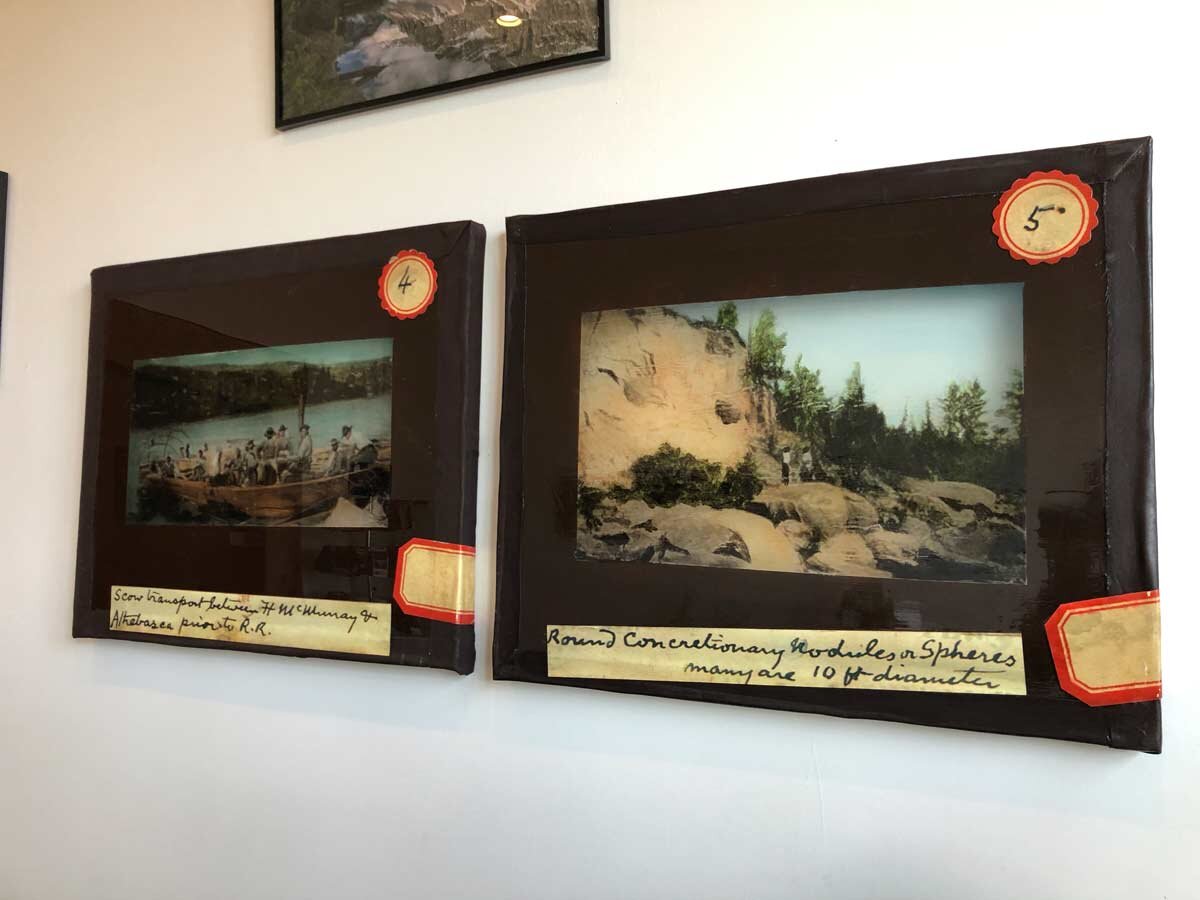
Dimensions: 24” x 19.5”
Medium: Acrylic, gel medium and fabric on plexiglass
These paintings were part of my initial studies for my Glass Slides series.
The source for these hand-painted gel transfers were a series of glass slides dating back to the early 1900s, found in my great-aunt’s dirt basement. Although the bulk of the slide are surveying images, mostly from the area around Fort McMurray, they are less about pure landscape and more about how people interact with the land that surrounds them. In these images, the Alberta landscape is seen through the lens of economics -- notions of the “grandeur of nature” are supplanted by a view of nature as exploitable resource. These also explore popular myths of the West as a frontier space, a place of infinite opportunities and possibilities.
These pieces were part of a group exhibition in 2002 curated by Isabela Varela and displayed in Saskatoon at the AKA Gallery, as well as in Edmonton at Latitude 53 Gallery. This exhibition was called “New Geographers”, and it essentially explored the idea of place as a concept versus the place as a lived experience. Six Edmonton-based artists participated, including Jonathan Eschak, Savi Pannu, Tandie McLeod, Jackie Barrett, Kristina Kudryk, and myself.
Dimensions: 24” x 19.5”
Medium: Acrylic, gel medium and fabric on plexiglass
These paintings were part of my initial studies for my Glass Slides series.
The source for these hand-painted gel transfers were a series of glass slides dating back to the early 1900s, found in my great-aunt’s dirt basement. Although the bulk of the slide are surveying images, mostly from the area around Fort McMurray, they are less about pure landscape and more about how people interact with the land that surrounds them. In these images, the Alberta landscape is seen through the lens of economics -- notions of the “grandeur of nature” are supplanted by a view of nature as exploitable resource. These also explore popular myths of the West as a frontier space, a place of infinite opportunities and possibilities.
These pieces were part of a group exhibition in 2002 curated by Isabela Varela and displayed in Saskatoon at the AKA Gallery, as well as in Edmonton at Latitude 53 Gallery. This exhibition was called “New Geographers”, and it essentially explored the idea of place as a concept versus the place as a lived experience. Six Edmonton-based artists participated, including Jonathan Eschak, Savi Pannu, Tandie McLeod, Jackie Barrett, Kristina Kudryk, and myself.
Dimensions: 19/5” x 19.5”
Medium: Acrylic paint, acrylic gel transfer and paper on plexiglass.
These paintings were part of my initial studies for my Glass Slides series.
The source for these hand-painted gel transfers were a series of glass slides dating back to the early 1900s, found in my great-aunt’s dirt basement. Although the bulk of the slide are surveying images, mostly from the area around Fort McMurray, they are less about pure landscape and more about how people interact with the land that surrounds them. In these images, the Alberta landscape is seen through the lens of economics -- notions of the “grandeur of nature” are supplanted by a view of nature as exploitable resource. These also explore popular myths of the West as a frontier space, a place of infinite opportunities and possibilities.
Dimensions: 16” x 24”
Medium: Acrylic paint and acrylic gel transfer on masonite
Dimensions: 16” x 24”
Medium: Acrylic paint and acrylic gel transfer on masonite
Dimensions: 16” x 24”
Medium: Acrylic paint and acrylic gel transfer on masonite
On the walls of Caffè Sole
Video excerpt of interview with CBC!
This week I had the amazing opportunity to speak with CBC’s @AdrienneLambCBC about my exhibition in @TheWorksFest!
This week I had the amazing opportunity to speak with CBC’s @AdrienneLambCBC about my exhibition in @TheWorksFest! It will be part of this week's edition of Our Edmonton. Here’s the link to the excerpt: https://www.cbc.ca/player/play/1559879235727.
Exhibiting at The Works Art & Design Festival
Some of my recent paintings will be in an exhibit at The Works Art & Design Festival, June 20 - July 2, 2019 at Capital Plaza on the Legislature Grounds.
UPCOMING EXHIBITION
Some of my recent paintings will be in an exhibit at The Works Art & Design Festival, June 20 - July 2, 2019 at Capital Plaza on the Legislature Grounds.
My new studio!
My new studio space at Studio72!
I have studio space at Studio72 now! And with Caffe Sole in the same building, it is a perfect space to be creative!
Dimensions: 9.75” (w) x 7.25” (h)
Medium: Acrylic and gel medium on masonite
These small paintings were part of my initial studies for my large 100 painting series for Postcards to Mrs. Lindahl (in Westlock, Alberta).
The source of these paintings were 100 postcards that I found in an old second hand book store, all addressed to the same woman (Mrs. Lindahl) in Westlock Alberta, from the 1920s to the 80s. These postcards are all from different people, from around the world. After showing these in The Works in 2000, I found out that Mrs. Lindahl owned a shop in Westlock, and people would send her greetings from their travels.
For these small studies, I used a gel transfer process to transfer the writing from the back of the postcard onto the painting surface, and then hand painted the stamp in acrylic paint.