Ferdinand Friedl
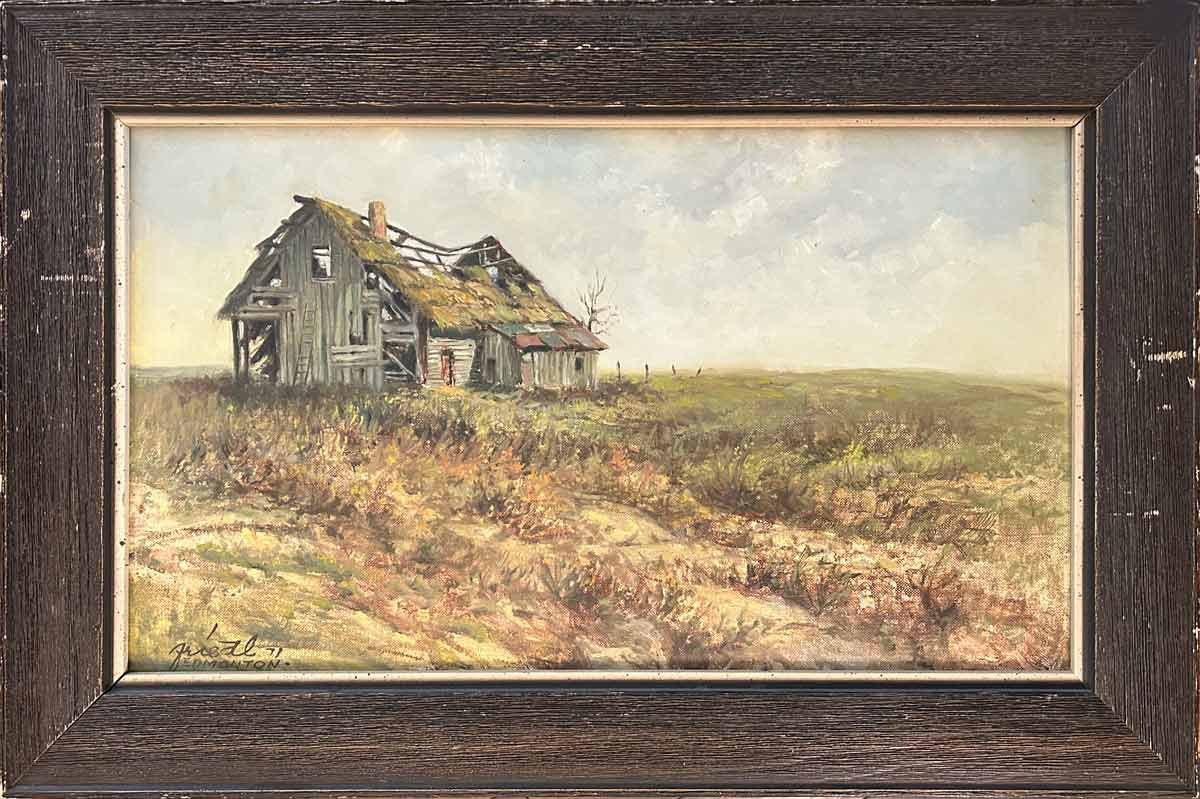
Untitled (Old Barn)
Ferdinand Friedl
Oil on canvas, signed Friedl, ‘71 Edmonton
20” x 12”
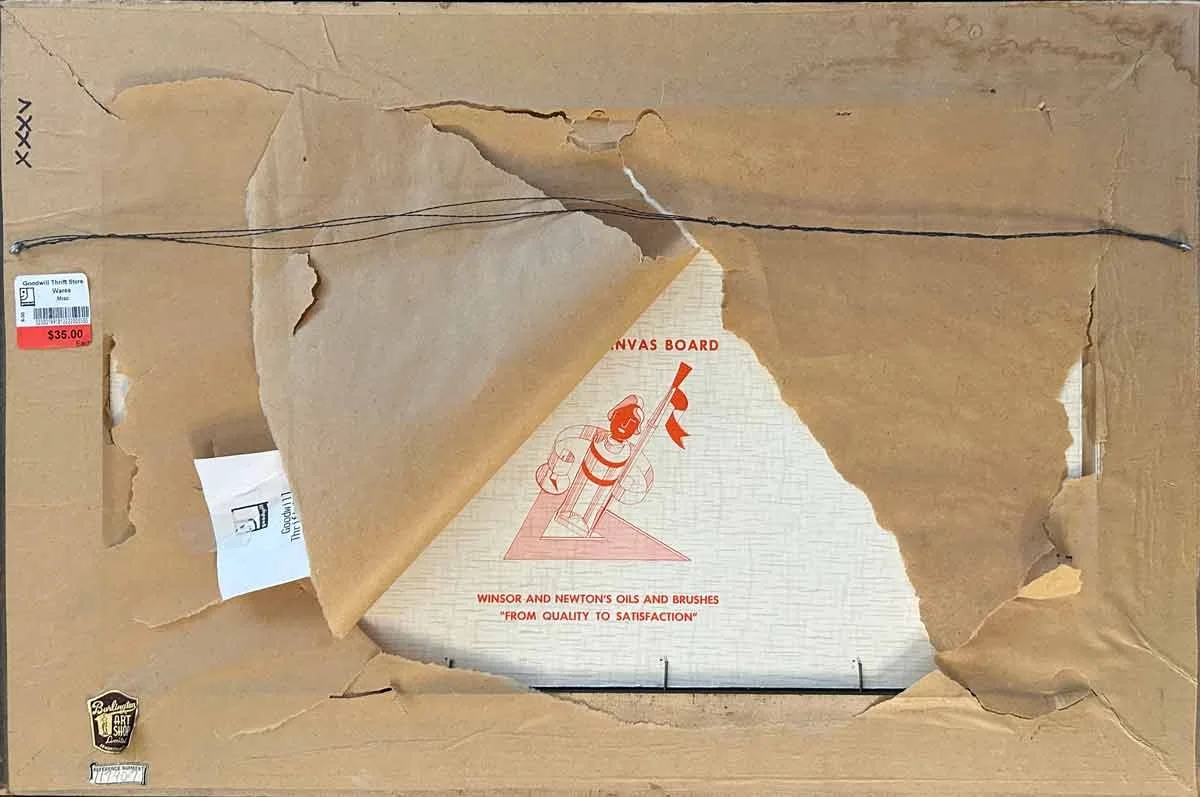
Sold by Burlington Art Shop Ltd., Edmonton, Alberta (documented on the back)
This painting depicts an aging barn set against an open prairie landscape. The structure is weathered and partially collapsed, its roof softened by moss and time. The surrounding land is sparse and expansive, with a low horizon and a pale sky that places the building firmly within the Prairie West.
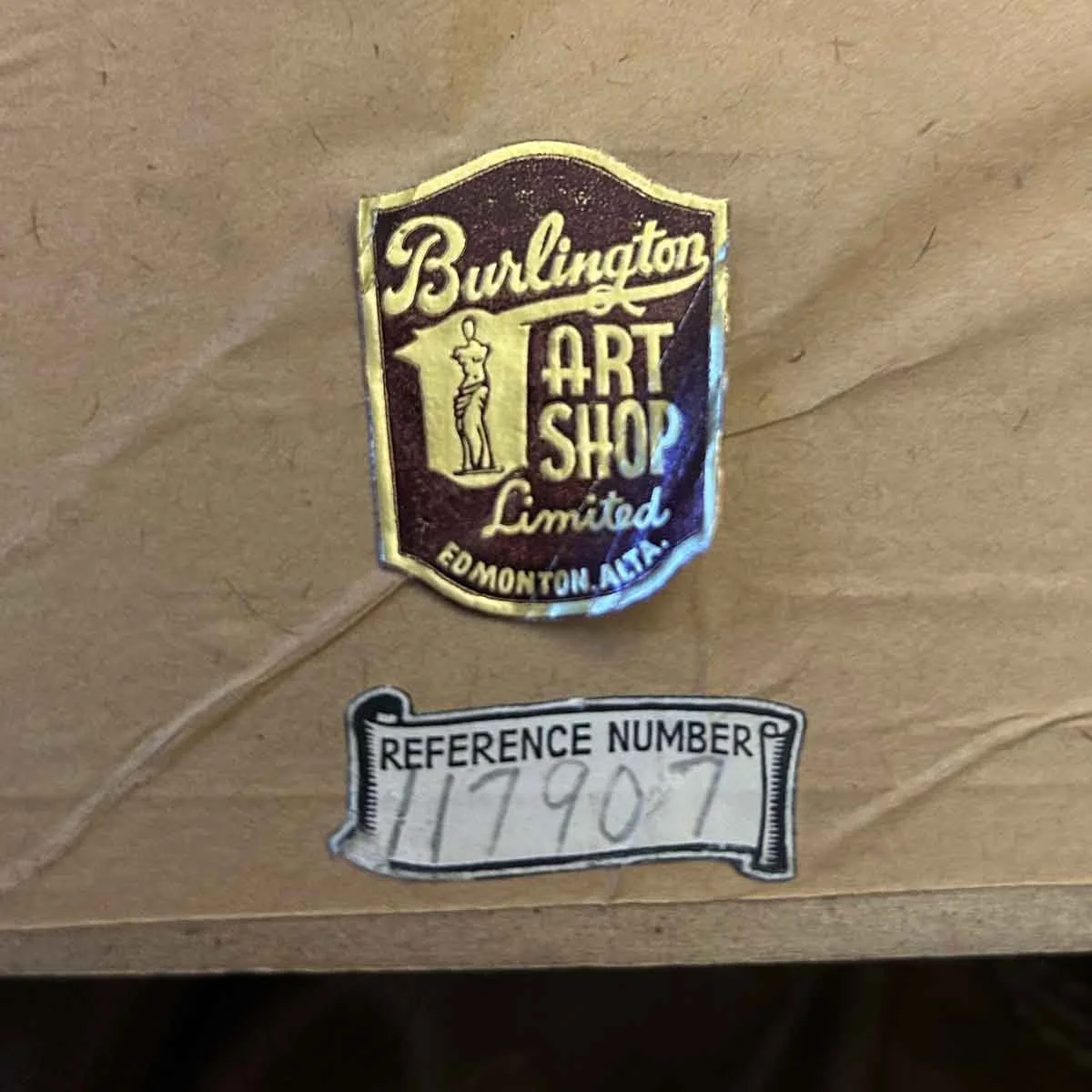
The work is signed “Friedl, Edmonton” and dated 1971. On the back of the frame is a metallic label from Burlington Art Shop Ltd., Edmonton, along with a handwritten reference number. This indicates that the painting was catalogued and sold through a commercial gallery operating in Edmonton during the postwar period.
Very little biographical information about Ferdinand Friedl has survived in public records. What can be confirmed is that he was active in Edmonton in the late 1960s and early 1970s and that his work circulated through established local art retailers. The subject matter and style of this painting align with other prairie and urban scenes attributed to him from the same era.
Like many regional artists working outside major institutions, Friedl’s legacy now survives primarily through the paintings themselves — objects that carry their own evidence of authorship, circulation, and place.
Why this matters
Paintings like this matter because they show how art lived in everyday spaces.
This work was not made for a museum or a private patron. It was made to be sold through a local art shop — framed, priced, catalogued, and taken home. That context matters. Burlington Art Shop, like many mid-century commercial galleries, played a role in making original art accessible to people furnishing their homes and offices. It validated regional artists by giving their work a public, economic life.
The barn itself is also a record. By 1971, structures like this were already disappearing from the landscape. Painted not as symbols or monuments, but simply as they stood, they mark a moment when rural life was still close enough to be remembered firsthand.
There is no artist statement here, no biography to explain intent. Instead, the painting offers something quieter: proof that someone stood in Edmonton, in 1971, and chose to paint this place. That choice — and the system that allowed the painting to circulate — is what remains.
For a collector, works like this are less about attribution and more about continuity. They remind us that art history isn’t only written by institutions. It’s also carried forward by ordinary objects, kept because someone once thought they were worth living with.
What we know
Ferdinand Friedl
Active in Edmonton in the late 1960s–1970s
Working as a professional exhibiting artist, not a hobbyist
Producing representational prairie subjects (barns, rural structures, open land)
His work was sold through established commercial galleries
Evidence from this painting
1. Signature + location
The painting is signed:
“Friedl – Edmonton”
This is important. Artists typically only add a city when:
They are actively working there, and
The work is intended for public sale or exhibition, not private study
This aligns with other Friedl works that reference Edmonton-area subjects in the early 1970s.
2. Date: 1971
This places the work squarely in a period when:
Edmonton’s population was rapidly expanding
Prairie modernity and rural disappearance were common themes
There was strong demand for recognizable Western Canadian landscapes for homes and offices
Your barn painting fits this cultural moment precisely.
3. Burlington Art Shop Ltd. — Edmonton, Alberta
This label is a key piece of context.
Burlington Art Shop Ltd. was:
A commercial art gallery and framing shop
Known for selling original paintings to the general public
Similar in role to Simpson’s, Eaton’s, and independent art shops that bridged “fine art” and everyday life
The presence of:
A branded metallic gallery sticker, and
A handwritten reference number (17907)
indicates this work was:
Catalogued
Priced
Sold as part of a formal retail art program
This was not informal or speculative — it was part of a functioning art economy.
What kind of artist Friedl appears to have been
Based on:
Subject matter (weathered barn, prairie land)
Style (loose realism, restrained palette, atmospheric sky)
Gallery context
Friedl fits the profile of a mid-century/postwar regional professional painter:
Likely trained or self-trained
Producing consistent, saleable work
Working outside major national institutions but firmly inside local cultural life
This is exactly the kind of artist whose work often survives without a published biography, even though they were visible and successful in their own time.
What is unknown (and why that’s normal)
We still don’t have:
Birth/death dates
Art school records
Museum holdings
Obituaries referencing artistic practice
That absence is itself characteristic of:
Commercial gallery artists
Regional painters
Artists whose work circulated primarily through shops rather than museums
Many artists like Friedl were locally known, locally collected, and locally remembered — until time scattered the records.
Why this painting matters (collector context)
This work is evidence of:
Edmonton’s mid-century art market
The role of commercial galleries in legitimizing regional artists
A moment when prairie buildings were still lived-in memories, not nostalgia
This Friedl painting isn’t just “a barn.”
It’s a trace of how art circulated, who it was for, and how place was pictured during a period of rapid change.
Back of painting
Reference number on back