Gladys Ada (Thompson) Steeves
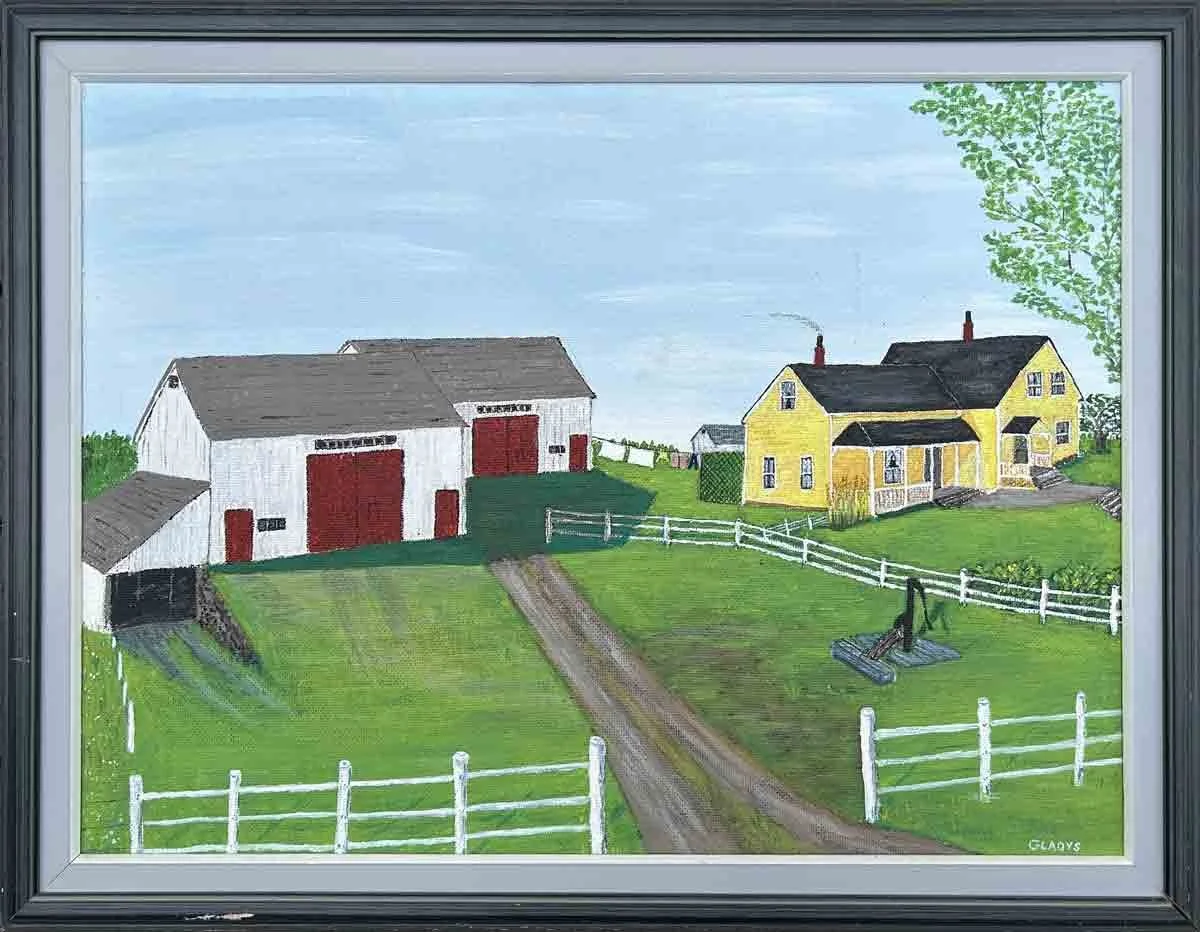
Painting by Gladys Steeves
My Nova Scotia Home
Gladys Ada (Thompson) Steeves (1924–2003)
July 1984
Acrylic on canvas, 24 × 18 in.
My Nova Scotia Home is a rural landscape painting by Gladys Ada Steeves, signed “Gladys” on the front and dated July 1984. The work depicts a farmstead in Central Caribou, Pictou County, Nova Scotia—a location identified in handwritten text on the back of the canvas.
At the time the painting was made, Steeves was living in Petitcodiac, New Brunswick, where she was a member of the Petitcodiac Arts Class from 1983 to 1993. Born in Pictou, Nova Scotia, Steeves married Ainsley Wellington Steeves in 1942 and later settled in New Brunswick. She died in Moncton in 2003.
An address label on the back of the painting lists “Mrs. Ainsley Steeves, R.R. 2 Petitcodiac, Westmorland Co., New Brunswick,” providing additional documentation of the work’s origin and ownership.
This painting is a reflection of how women’s creative labour functioned regionally in mid-to-late 20th-century Atlantic Canada. It is important because it is:
A document of place memory
A woman’s authored view of rural Nova Scotia
A specific, named, dated site
Tied to a known life story
Representative of a largely undocumented artistic culture
This is exactly the kind of work museums now quietly regret not collecting earlier.
I’m drawn to paintings like this because they weren’t made to be exceptional—they were made to be true. Works like My Nova Scotia Home come from a time and place where creative practice often lived quietly alongside daily life, especially for women. Painting happened in spare rooms, community classes, and evenings carved out between responsibilities. The work mattered deeply, even if it wasn’t framed as “art” in a formal sense.
As a collector, what interests me is not polish or provenance, but presence. These paintings hold lived experience: how a place was remembered, what details were worth recording, what felt essential enough to put down in paint. They were created for connection—for family, for community, for the maker herself—and that intent is still visible decades later.
Many works like this disappear because they were never meant to circulate beyond their immediate world. When they surface, often separated from their stories, they remind me how much creative labour—particularly by women—has gone unrecorded. Collecting, researching, and sharing these paintings is a way of keeping those stories intact, and of acknowledging the quiet, enduring role art has played in everyday lives.
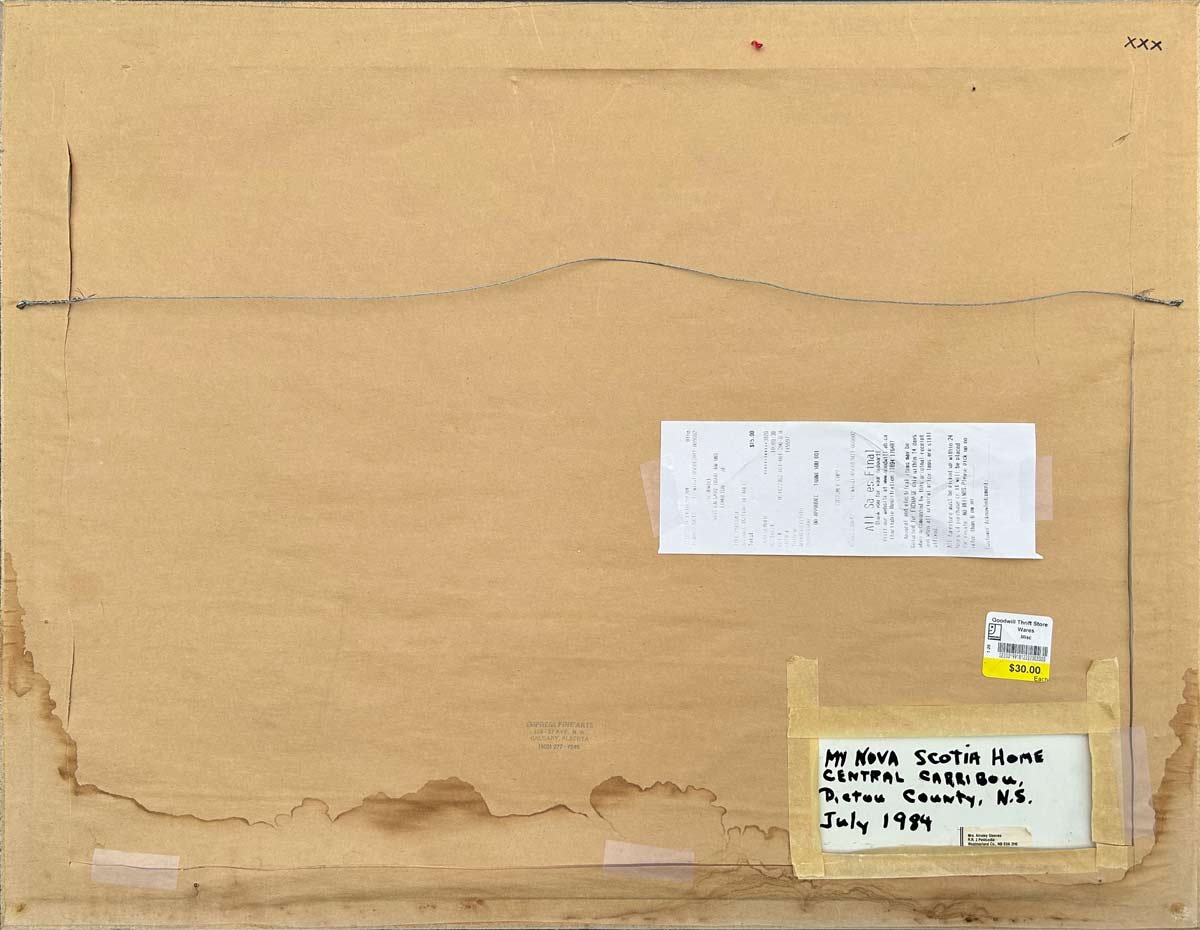
Back of the painting by Gladys Steeves
Purchased at Goodwill in Edmonton in Feb 2024