Bernice Trider
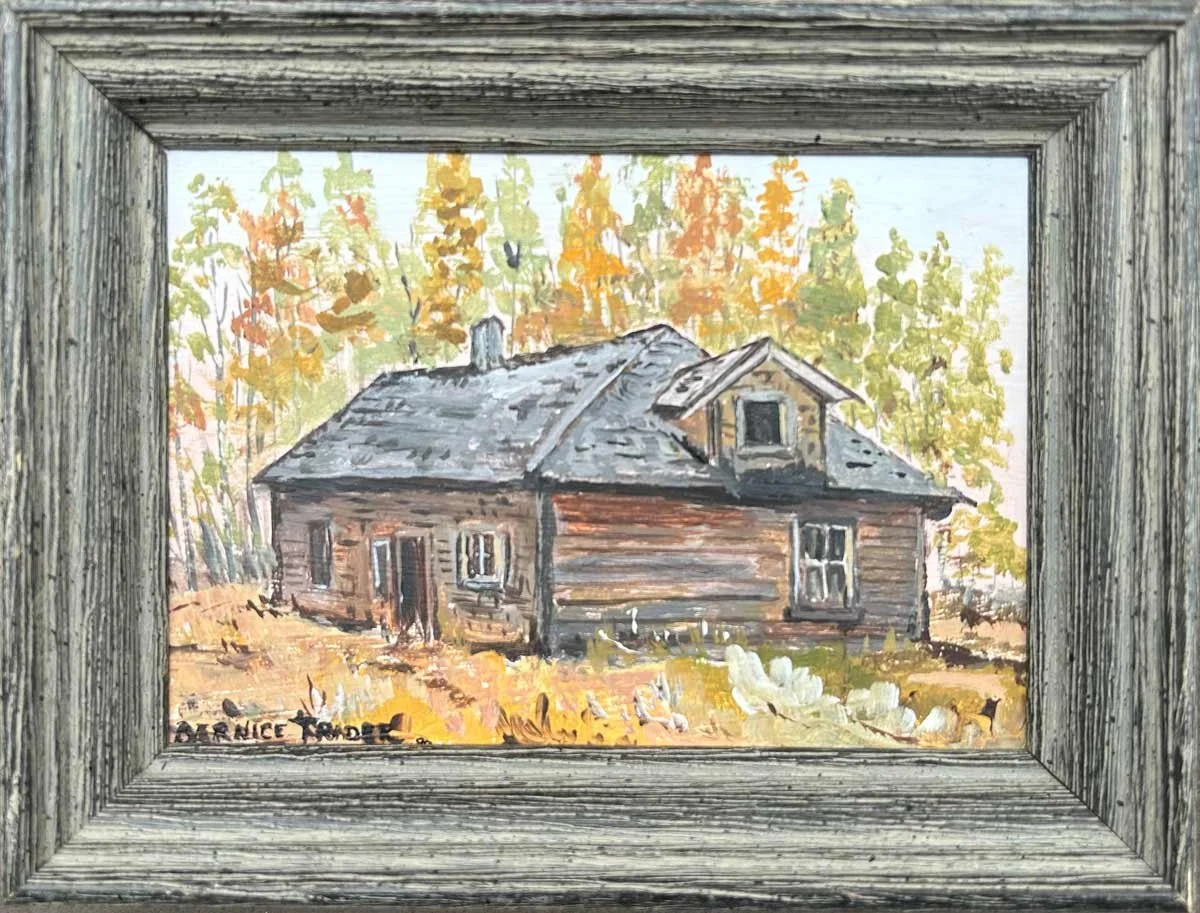
Painting by Bernice Trider
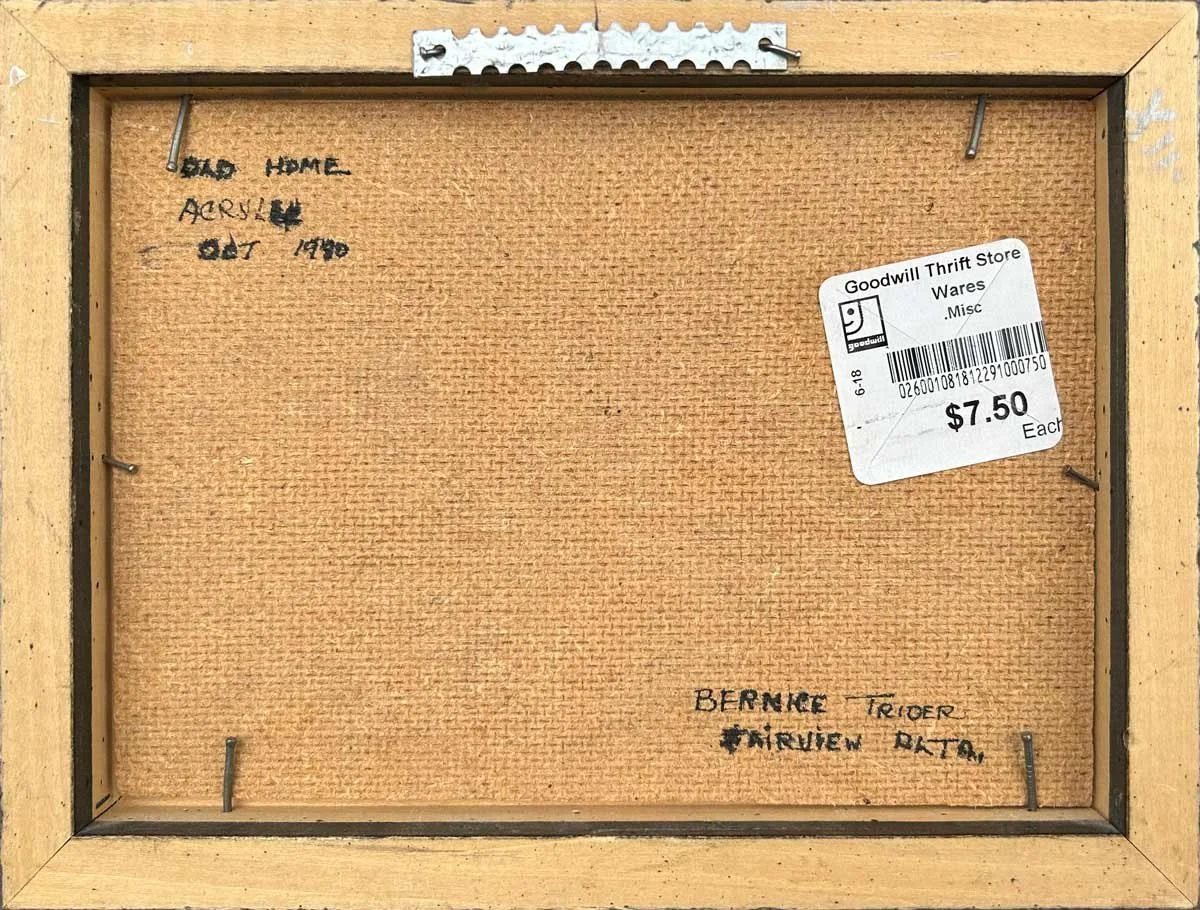
Back of the painting by Bernice Trider
Old Home
Bernice Trider (1926–2015)
October 1980
Acrylic on board, 7 × 5 in. (framed 8 × 6 in.)
Old Home is a small-format acrylic painting by Alberta artist Bernice Trider, signed on the front and dated October 1980. The title, medium, date, artist’s name, and location—Fairview, Alberta—are handwritten on the back of the work.
Trider was born in the Fairview area of Alberta’s Peace Country and remained there throughout her life. She studied painting and drawing through the Grande Prairie Regional College, the Peace Summer School of Landscape Art, and various workshops. Although she later became best known for her watercolours, this early work predates her near-exclusive focus on that medium.
Trider was an active member of the Peace Watercolour Society beginning in 1984 and participated regularly in local exhibitions through the Fairview Fine Arts Society. She died in Fairview in 2015 at the age of 89. This work was purchased at Goodwill in Edmonton.
What draws me to a painting like Old Home is its scale and its certainty. It’s small, direct, and clearly made with care—not as a study, but as a finished statement. Paintings like this were often created close to home, both physically and emotionally, and circulated locally rather than entering broader art markets.
For artists like Bernice Trider, creative practice was sustained through regional classes, workshops, and community art societies. Recognition came through participation, persistence, and shared exhibition spaces rather than through formal institutions. These works were made to be lived with—to be framed, gifted, entered into local shows, or kept close—rather than preserved as cultural artifacts.
As a collector, I’m interested in these paintings because they hold evidence of a lifelong relationship with place. They document how artists returned to familiar structures and landscapes over decades, refining their skills while staying rooted in the environments that shaped them. Preserving and sharing these works is a way of honouring creative lives that unfolded steadily, locally, and with deep commitment—often without the expectation of lasting visibility.