Margaret Mann-Butuk
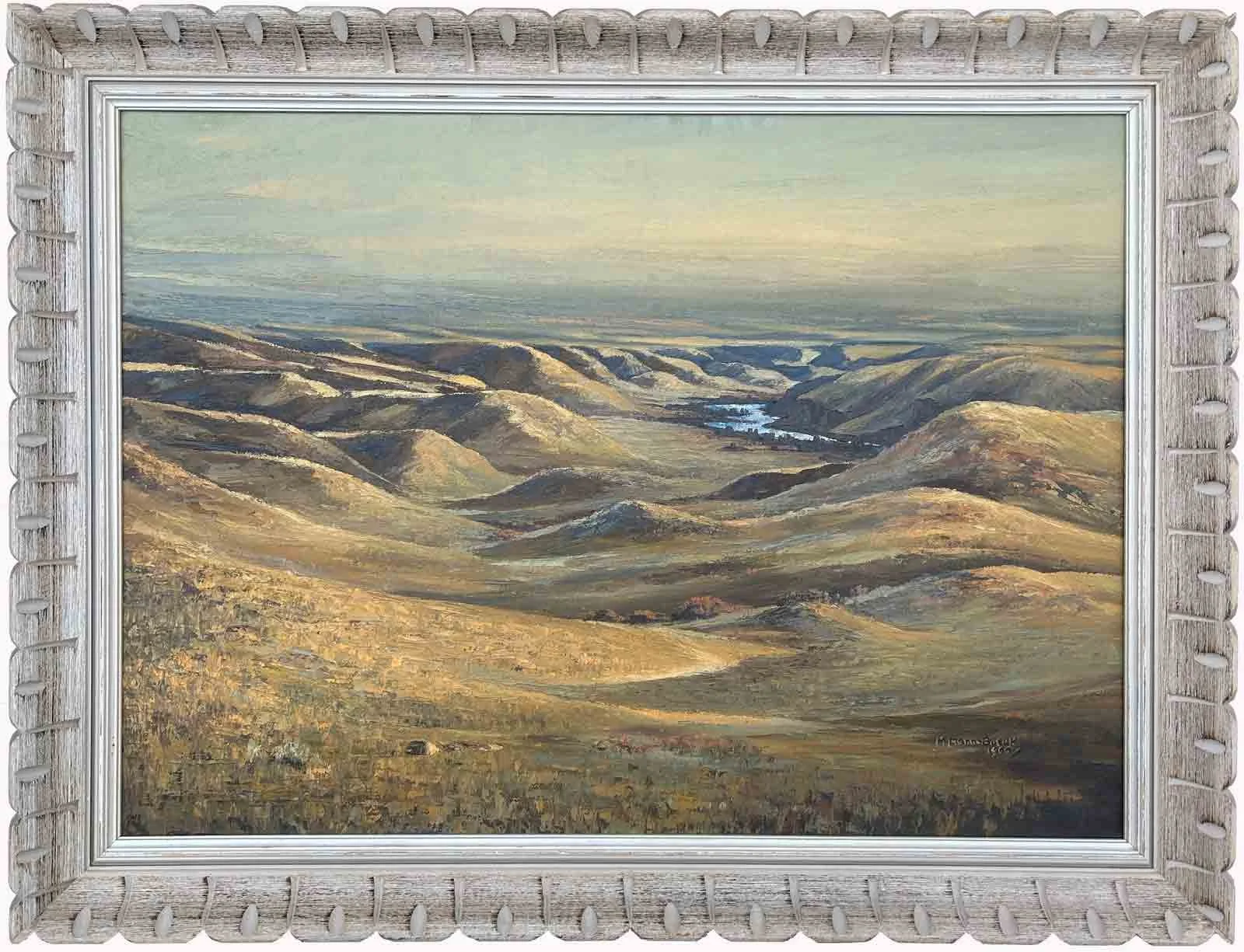
Light for the Valleys by Margaret Mann-Butuk
Light for the Valleys
Margaret Mann-Butuk
1966
Oil on linen canvas (palette knife), 30 × 22 in.
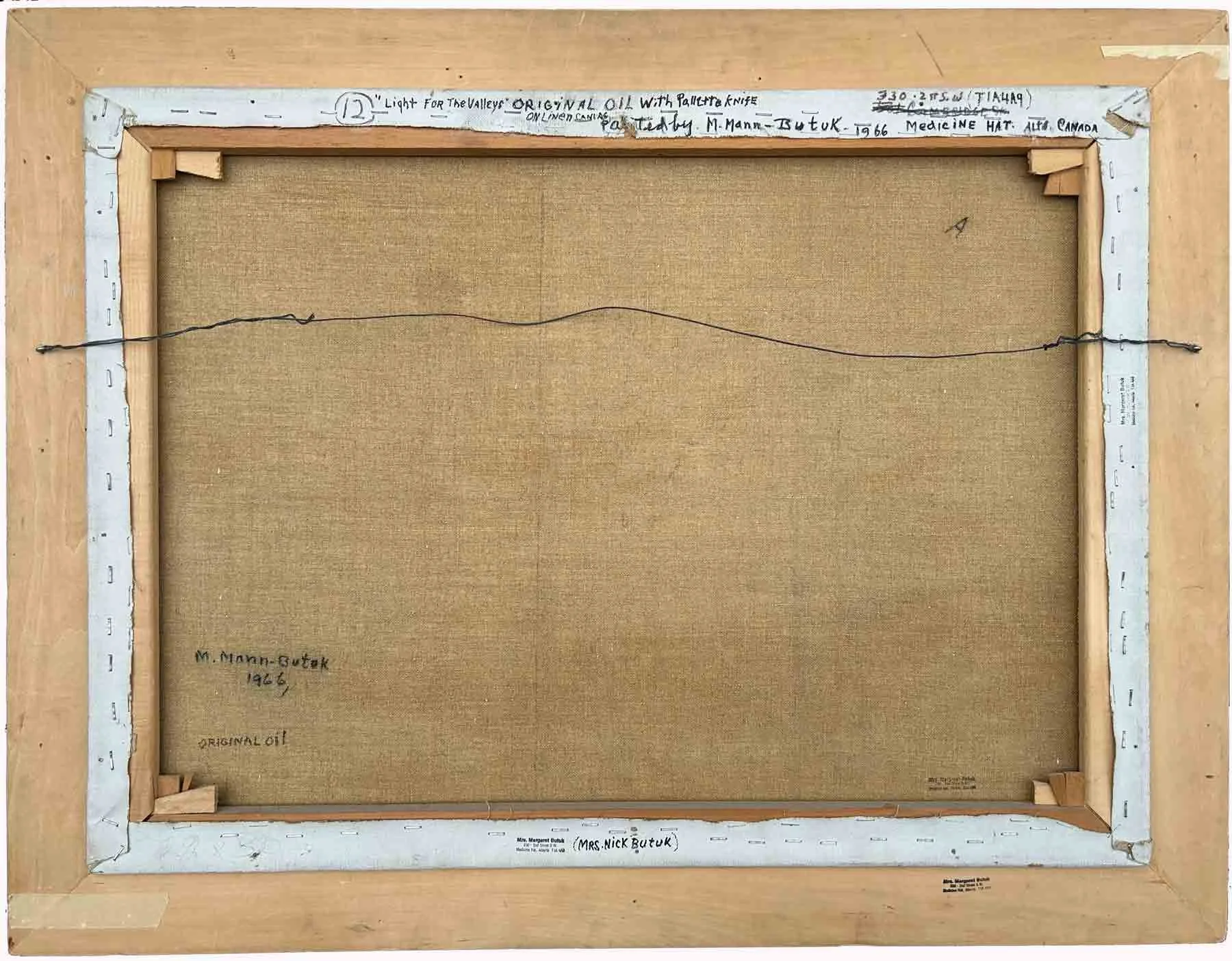
Light for the Valleys is an original oil painting by Margaret Mann-Butuk, signed and titled on the reverse and dated 1966. The work is executed with a palette knife on linen canvas and bears a stamped address indicating residence in Medicine Hat, Alberta.
Mann-Butuk was born in the Eatonia district near Kindersley, Saskatchewan, and pursued art from an early age, beginning with correspondence courses as a child. She later studied at the Banff School of Fine Arts under Charles Stegeman and Luke Lindoe. During the 1960s, she was an active painter, completing dozens of works annually and exhibiting widely.
In November 1966, the same year this painting was completed, Mann-Butuk held a one-person exhibition at the Music and Fine Arts Building of Brandon College in Manitoba. Her work has been noted for its representation of prairie and foothill landscapes, capturing the scale, light, and solitude of the South Saskatchewan River Valley and surrounding regions.
This painting was acquired at a church rummage sale in Edmonton in May 2023.
This painting matters to me because it sits at an important intersection: between regional visibility and personal persistence. Margaret Mann-Butuk was not an anonymous maker. She trained seriously, exhibited publicly, and was written about by contemporary critics. And yet, like many women artists working outside major urban centres, her work now circulates quietly—through churches, estate sales, and community spaces rather than galleries.
What I value as a collector is how Light for the Valleys holds both confidence and restraint. It is ambitious in scale and technique, but deeply rooted in familiarity. Mann-Butuk painted the land she knew repeatedly, returning to the same valleys, hills, and skies over decades. The result isn’t spectacle; it’s understanding.
Collecting a work like this is a way of bridging formal art history and lived practice. It reminds me that even artists who were trained, reviewed, and exhibited can slip from view. Preserving these paintings, along with their stories, is a way of keeping regional artistic histories intact and accessible.