Hazel Miller Church
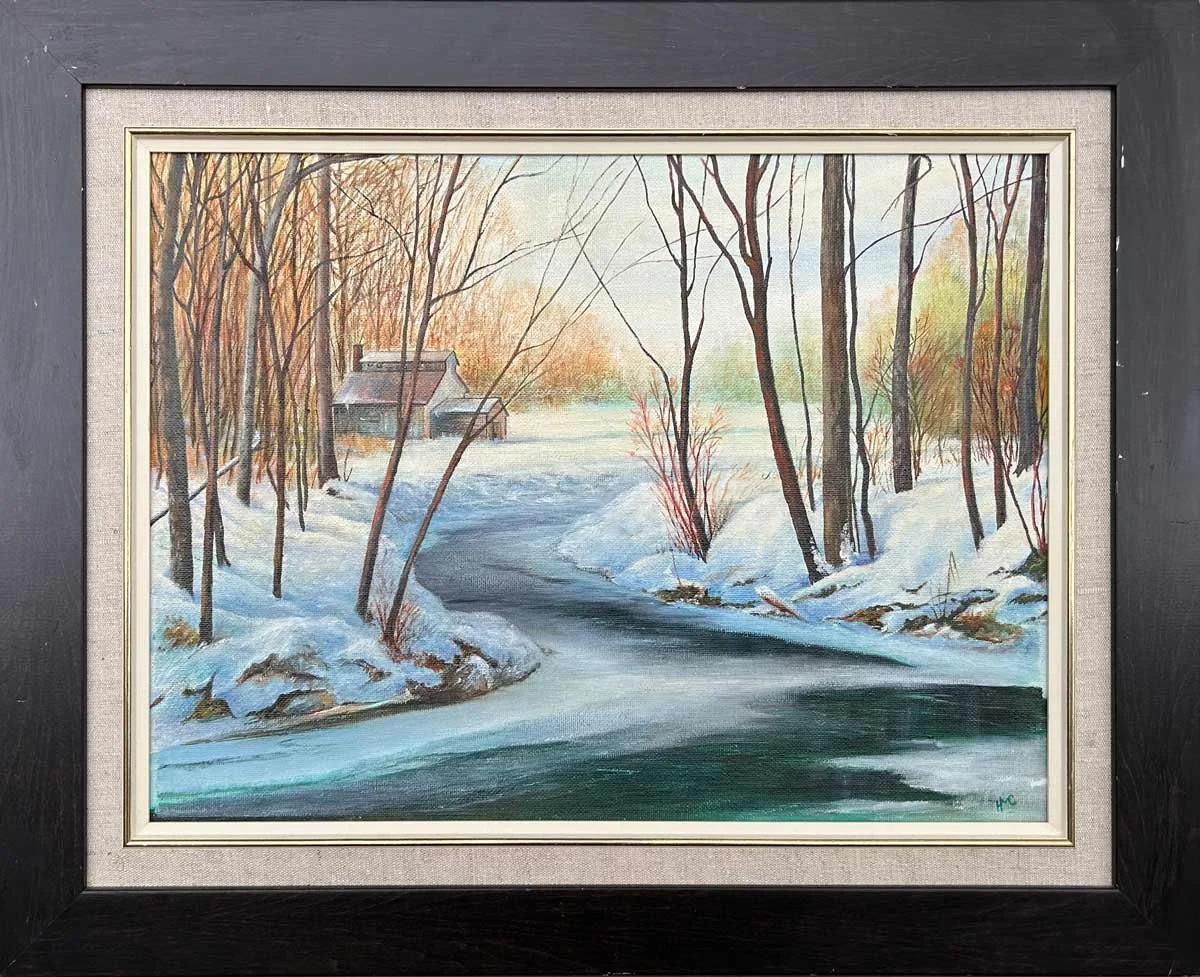
Sugar Shack
Hazel Miller Church
Paint on board
16” x 12”
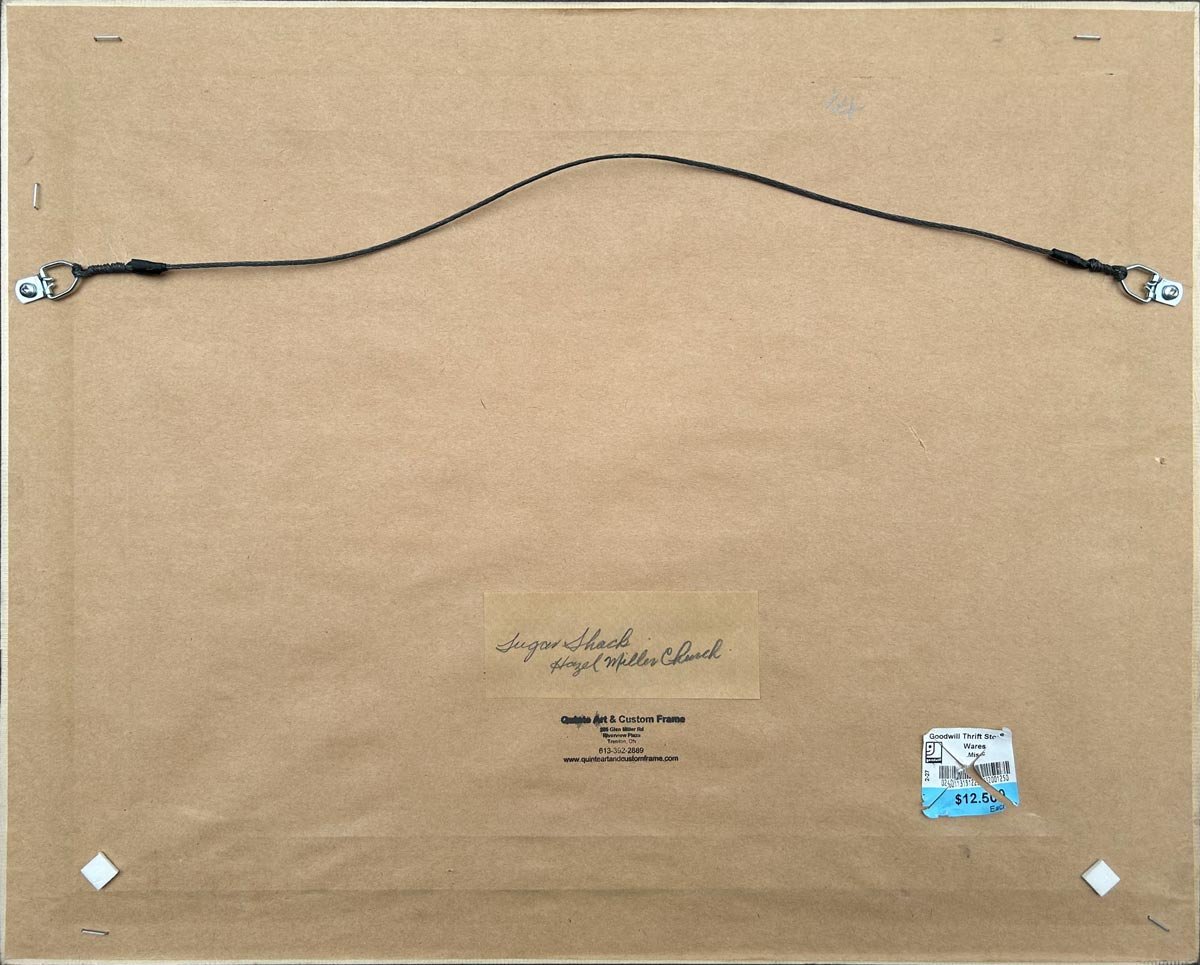
Back of Sugar Shack by Hazel Miller Church
Sugar Shack
Paint on board, 16” × 12”
Signed with initials on the front; titled and signed on the back
Purchased at Goodwill, 2024
Sugar Shack depicts a winter landscape centered on a maple sugar shack, nestled among bare trees beside a partially thawed stream. Snow blankets the ground, while soft light filters through the forest, suggesting the seasonal shift between deep winter and early spring.
The work is painted in a representational style, with careful attention to atmosphere, reflected light, and depth. The subject matter—maple syrup production—situates the painting within a distinctly Eastern Canadian and Northeastern North American cultural landscape, where sugar shacks mark both agricultural labour and seasonal ritual.
The artist’s full name and the title are written on the back of the panel, indicating intentional authorship and identification, even though little biographical information about Hazel Miller Church is currently known.
This painting matters because it exists outside the usual systems of recognition.
Hazel Miller Church may not appear in art histories or auction records, but this work tells us a great deal about how art has functioned in everyday life. It was made to be lived with—to hang on a wall, to mark a season, to reflect a familiar place. The care taken to title and sign it suggests pride in the work, even if wider visibility was never the goal.
The sugar shack itself is a quiet symbol of continuity. It represents labour tied to land, knowledge passed down through practice, and a moment in the year that arrives reliably but briefly. By painting it, Church preserved something transient—snow that will melt, a stream beginning to move again—into something lasting.
As a collector, I’m drawn to works like this because they remind me that most creative labour has always happened outside institutions. These paintings survive not because they were deemed important at the time, but because someone valued them enough to keep them, frame them, and eventually pass them along.
Finding Sugar Shack at a thrift store doesn’t diminish it. It extends its life. The painting continues to do what it was made to do: offer a sense of place, season, and quiet presence.