Collected
I’ve started collecting paintings and objects from second hand stores, garage sales, and rummage sales. I see my collecting as a temporary waystation for handmade and artist-made items that have lost their original context but not their meaning. These objects—wooden toys, pottery, paintings, and artifacts—are held for a time, appreciated for their care and intention, and then allowed to continue on to new homes.
Each piece is part of an ongoing story. My role is not to collect permanently, but to witness, preserve, and pass along.
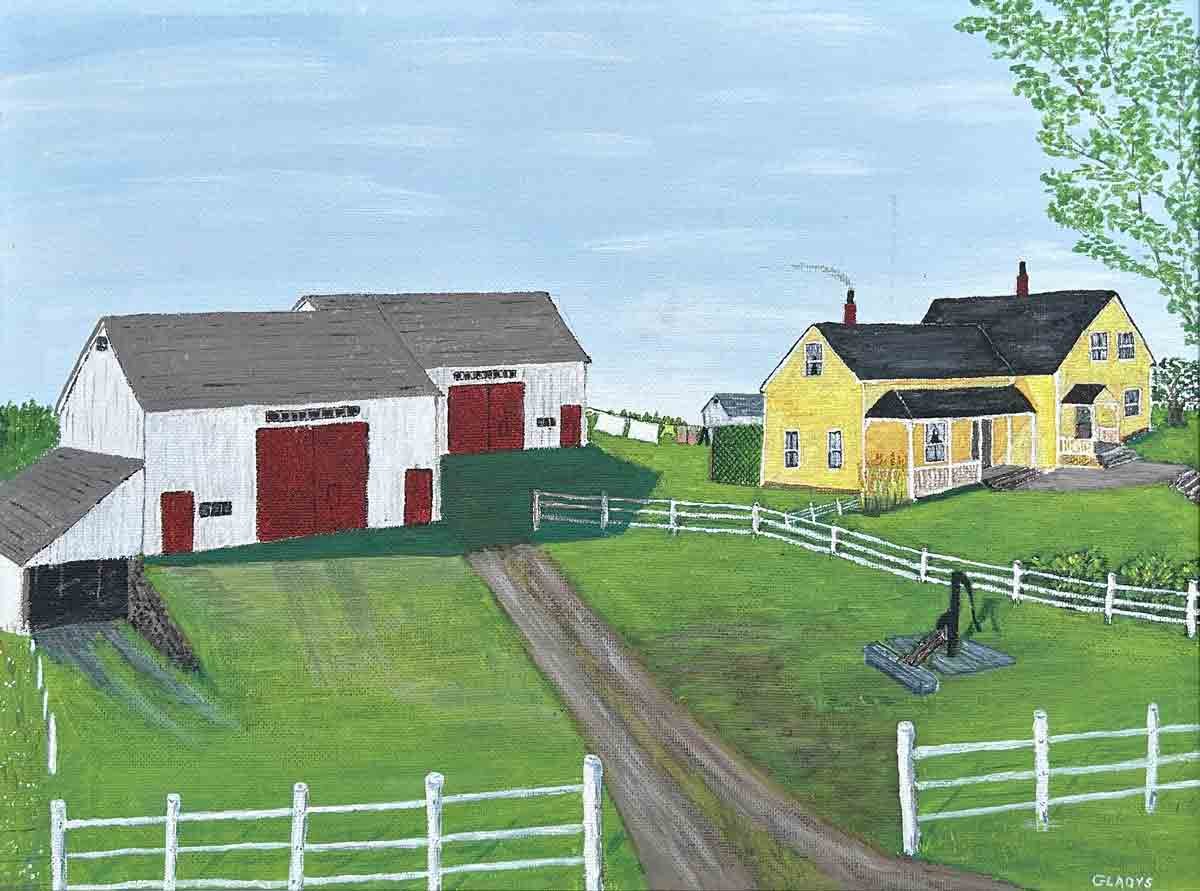
Gladys Ada (Thompson) Steeves
Painted in 1984, My Nova Scotia Home feels like a letter to a place. Gladys Ada Steeves names the location, the date, and the memory directly on the canvas, anchoring the work in a lived relationship with Central Caribou, Nova Scotia.
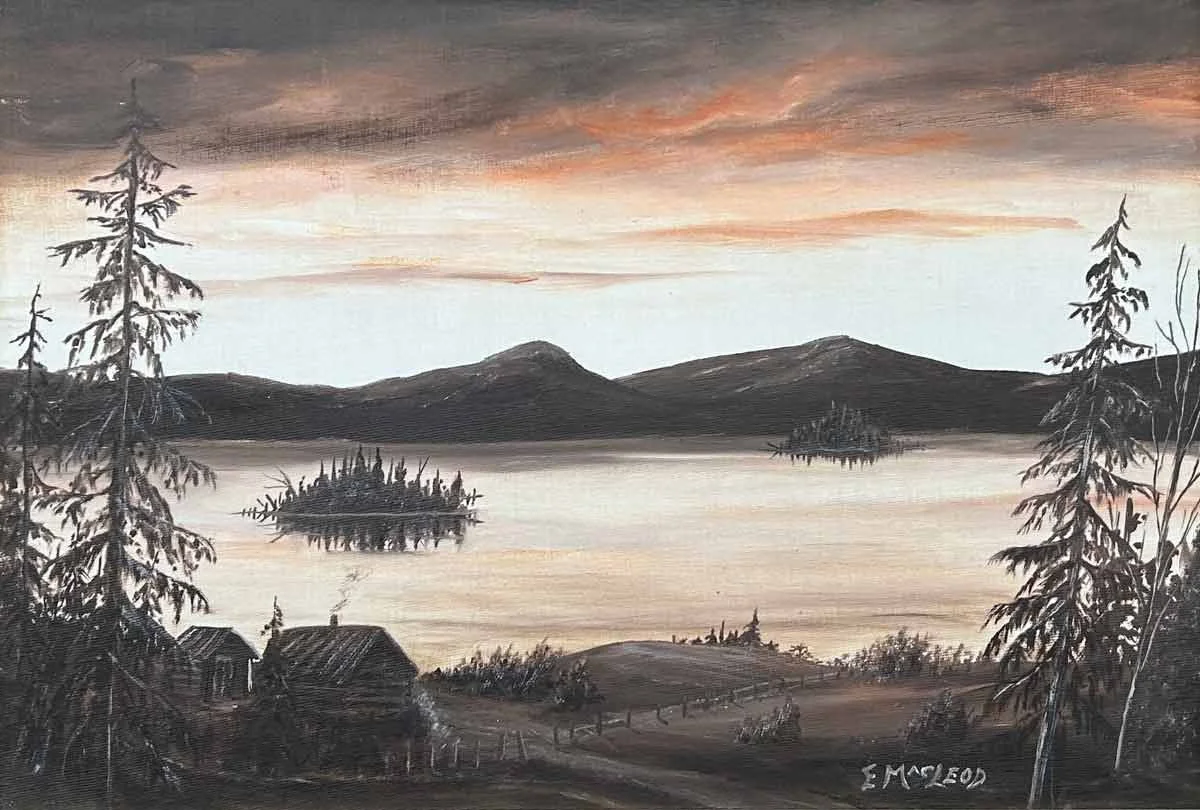
E. MacLeod
A small, unsigned-in-every-way-but-name landscape by E. MacLeod. A lake, distant hills, and a restrained palette that rewards slow looking.
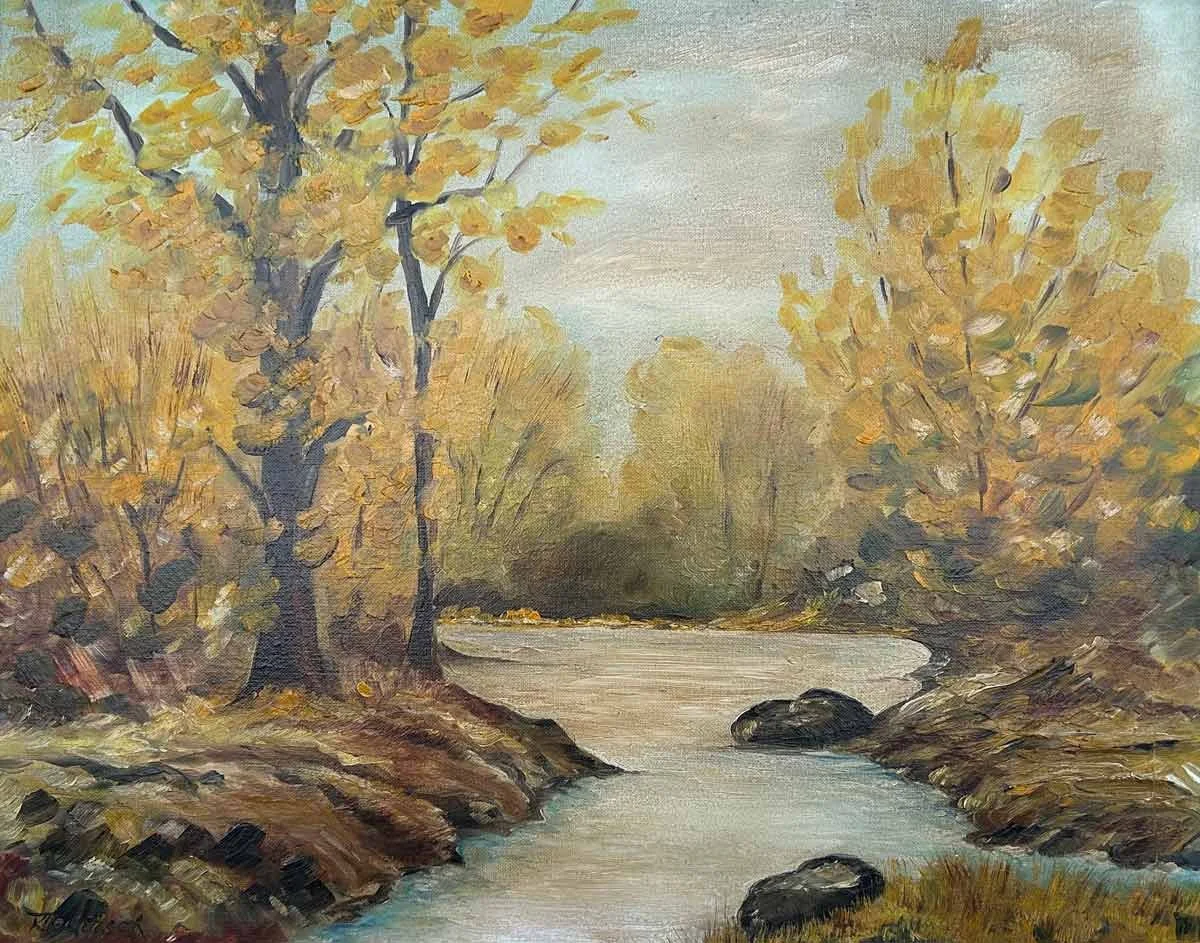
Eglantina Perlorea Swartz
A small Alberta landscape, dated June 9, 1968. A name, a place, and a painting that endured.
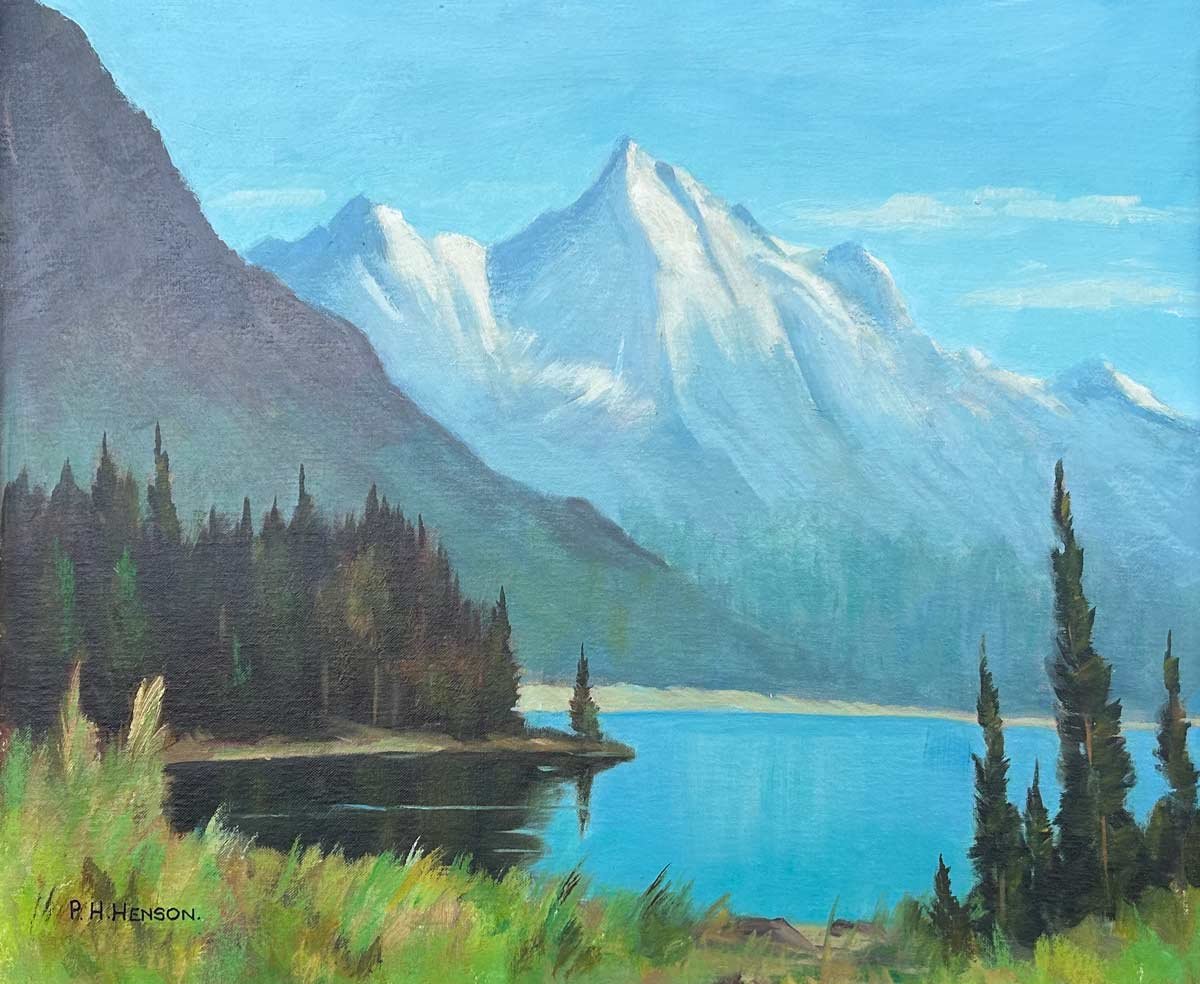
Percy Henry Edgar Henson
Painted as a demonstration in 1970, this view of Medicine Lake captures a moment of teaching as much as a place. A working painting, made to be shared.
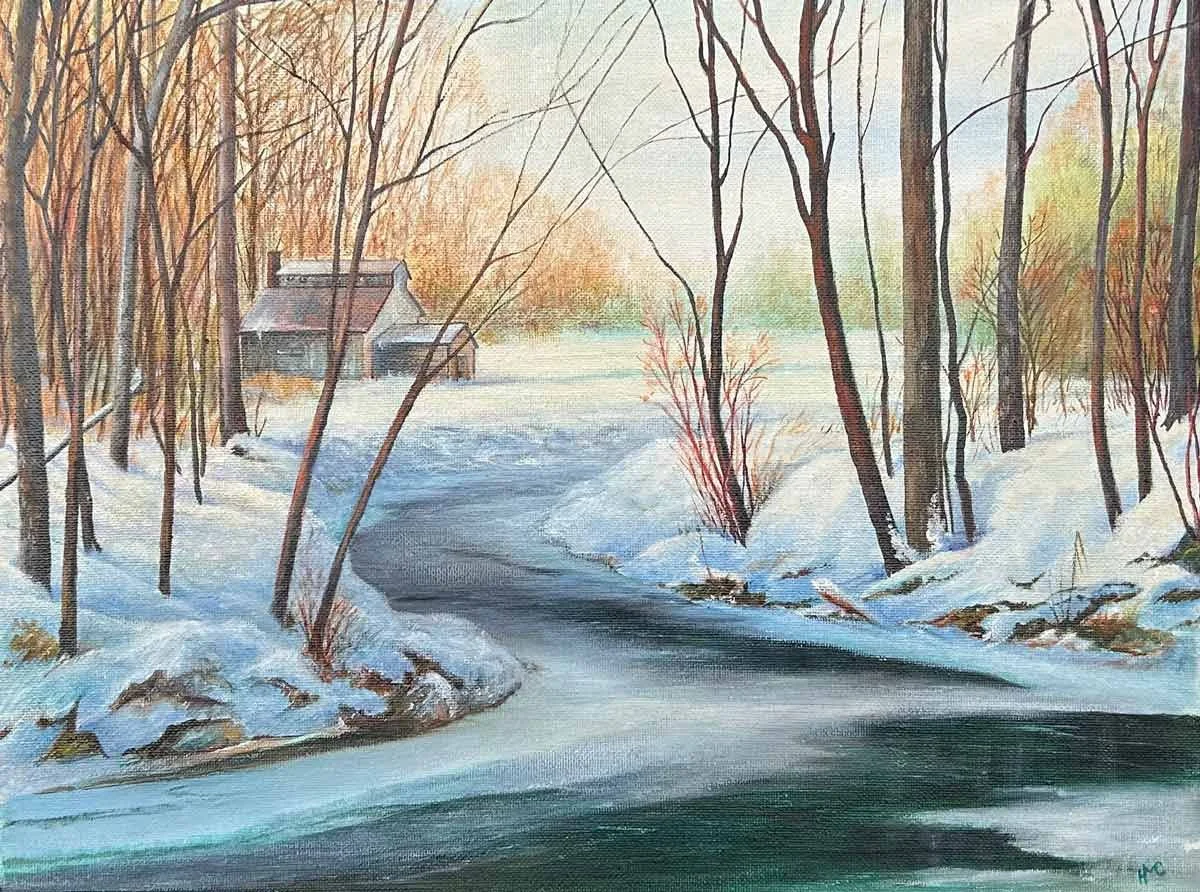
Hazel Miller Church
A winter sugar shack, a thawing stream, and a painter whose story survives only through the work itself. Sugar Shack is a reminder that not all meaningful art leaves a paper trail.
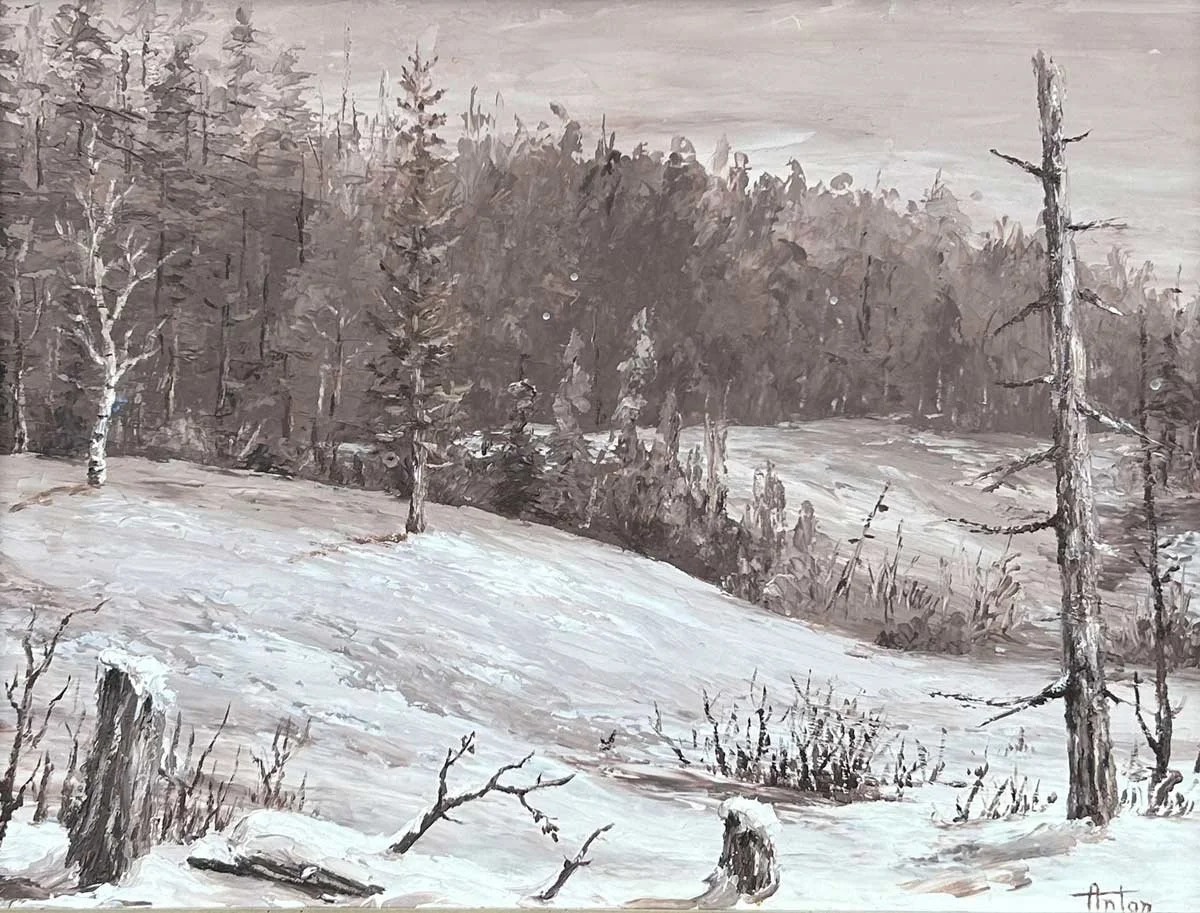
Works by Anton Kohalyk
This series of monochromatic paintings by Anton Kohalyk captures the Peace Country not as spectacle, but as something lived in and returned to—winter after winter. Birch stands, frozen sloughs, moonlit clearings, and soft animal movement emerge through restrained colour and confident palette-knife strokes. These are not photographs of the land, but remembered encounters with it.
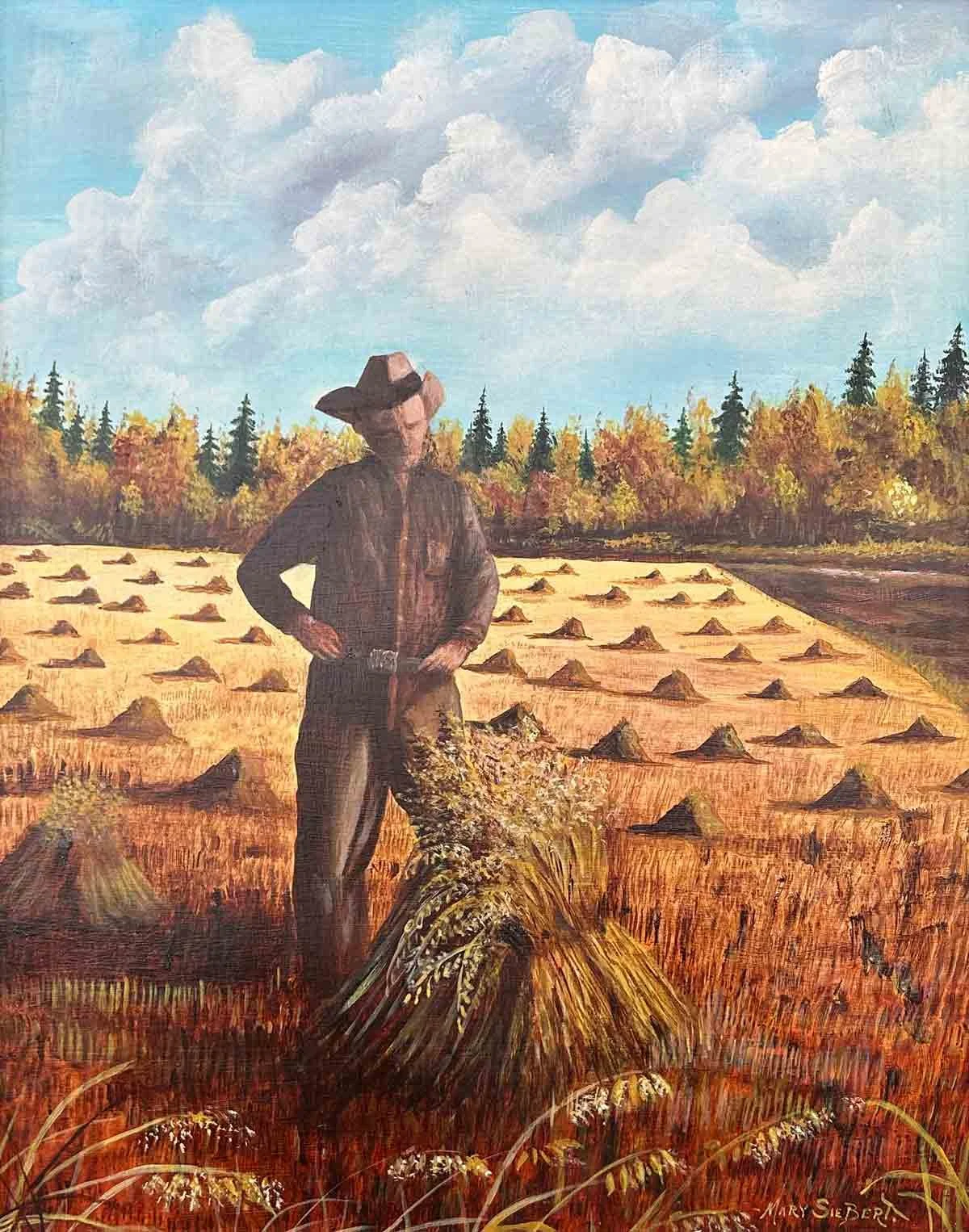
Mary Siebert
A prairie field, a solitary figure, and the last stook standing. Signed by Mary Siebert, this painting holds a quiet record of work, place, and passing time.
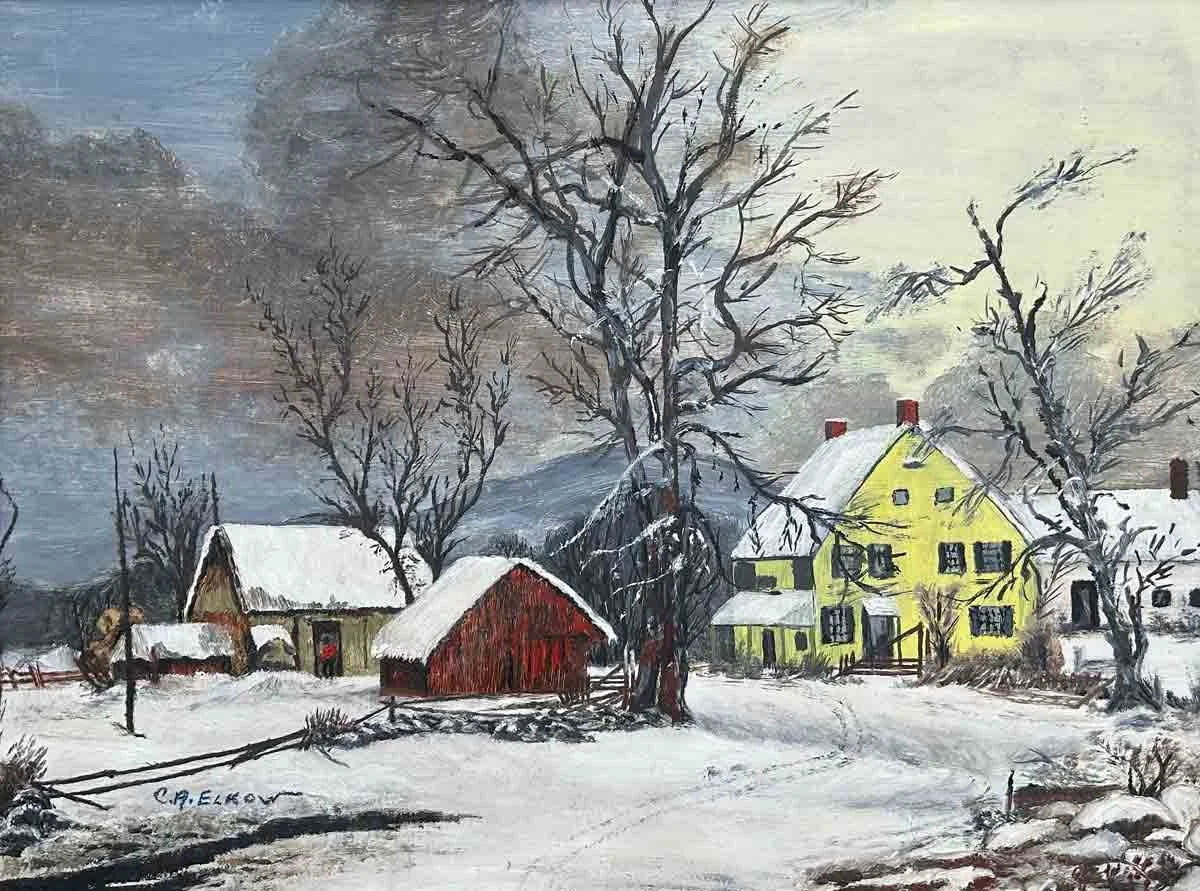
C.A. Elkow
Painted after a 19th-century lithograph, this mid-century winter scene reflects how images lived on through practice, not preservation.